
The Monster Called Fear
Leadership asks us to do things that feel uncomfortable. We have to make hard calls, have conversations we'd rather avoid, overcome difficult challenges, and employ skills that may not come naturally. Many of us know what we should do but still hesitate when the moment comes, and fear is often the reason.
When we let fear steer us, we're drawn back toward familiar ground: our established routines and the strengths that already come easily to us. Protecting that comfort zone becomes a natural defense mechanism, but it can limit our growth and make it harder to persevere when more is required of us.
Every leader feels fear. Resilient leadership requires us to recognize when it's influencing our choices and challenge ourselves to figure out why. From there, perseverance asks us to act despite that discomfort. Each time we make that choice, we’re facing The Monster Called Fear.

Self-Assessment: The Monster Called Fear
Please take a few moments to reflect on the following questions. Where can you identify opportunities for growth in your leadership?
When a situation feels uncomfortable, am I quick to address it, or am I more likely to avoid it?
Am I aware of how fear shows up in my thinking?
When I hesitate, can I usually identify what it is that I’m afraid of?
Do I rely too heavily on the abilities that come most naturally to me, or am I willing to practice what feels less natural?
When a responsibility asks more of me than I’m used to, am I willing to step outside of my comfort zone?
Can I admit when fear or apprehension is influencing my choices?
Do I make excuses that protect my comfort at the cost of delaying what needs my attention?
Am I setting a good example for my team in how I handle responsibilities that push me outside my comfort zone?
This self-assessment is a starting point for understanding The Monster Called Fear as a leader. Reflect on your responses, identify areas for growth, and use feedback from others and your ECFL Leadership Coach to guide your development.
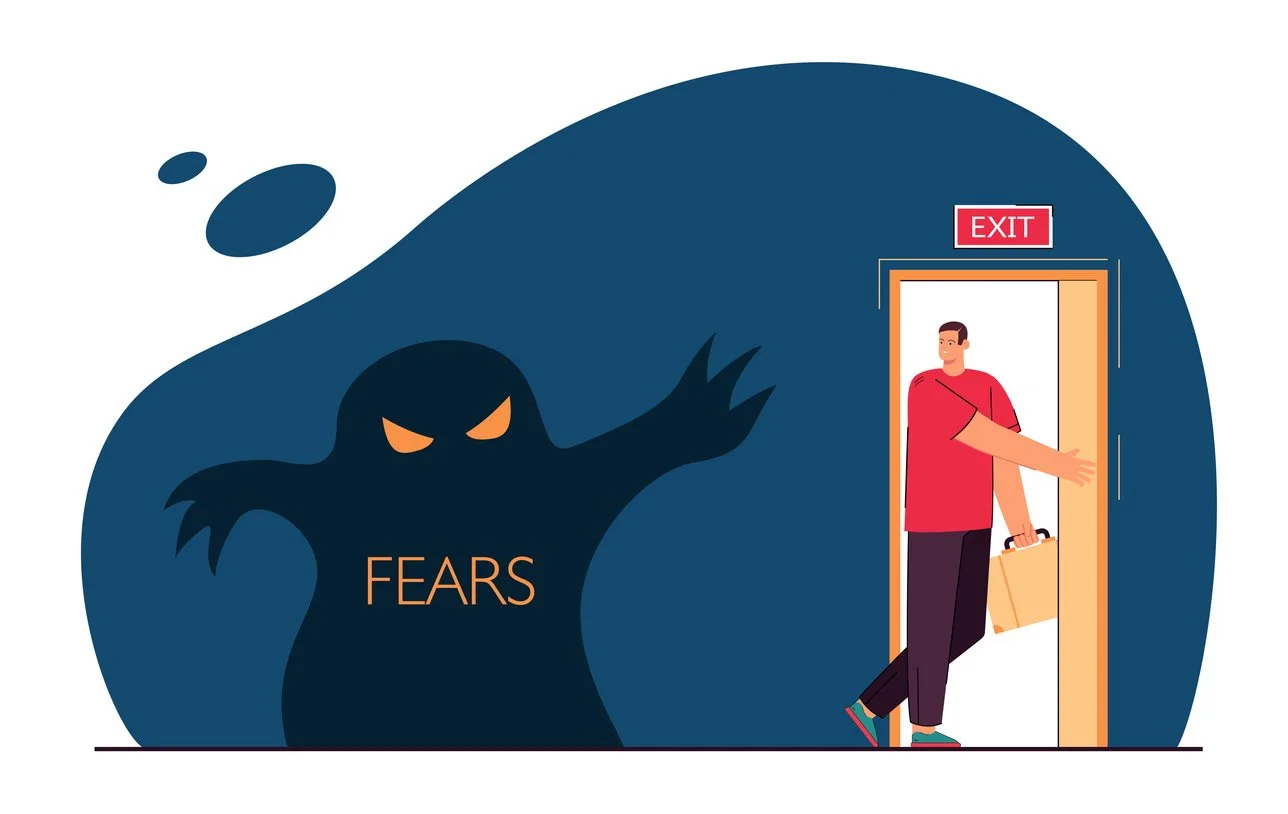

Perseverance is part of ordinary life. A person displays perseverance when they return to school after years away to pursue a new field, or leave a stable job to start over in a healthier environment. This instinct also shows up in seeing a doctor about a symptom they've been avoiding because they're afraid of the diagnosis, or asking for support when struggling with their mental health. Whenever someone continues working toward a goal despite obstacles or discouragement, they're practicing perseverance.
This same quality can also be seen in our leadership, though the moments are usually less dramatic. Perseverance can look like:
Giving difficult feedback to someone you get along with well
Speaking up in a meeting when a plan looks good on the surface, but there's risk involved
Staying patient and focused on an important priority when progress is slower than expected
Following through on a commitment after the initial motivation has faded
Asking for support when you're struggling to overcome a hurdle
Adjusting your approach when something isn't working instead of giving up
Returning to a difficult conversation after the emotions have settled
Maintaining the same expectations even when pressure or deadlines make it tempting to lower the standard
“Leaders are the ones who run headfirst into the unknown.”
Our natural strengths serve us well, but they can also be limiting when we rely on them too heavily and avoid cultivating the abilities that come to us less naturally. A person who is strong in planning and execution may avoid emotionally charged conversations, finding comfort in structured tasks rather than the unpredictability of conflict. A person who connects easily with others may avoid direct accountability because the instinct to protect a relationship can make honest criticism feel like putting the relationship itself at risk. Fear often keeps us from developing new skills when they fall too far outside our comfort zone.
The following questions can help us identify how The Monster Called Fear influences our choices and limits our growth:
Which parts of leadership come most naturally to me? Planning, relationship building, decision-making, direct communication?
Which parts of leadership feel hardest for me? Conflict, correction, vulnerability, accountability?
What situations do I repeatedly delay because I don't feel confident handling them?
When something becomes more difficult than I expected, am I likely to keep working toward the outcome or start pulling back?
When progress slows, do I stay focused on the goal while considering whether my approach needs to change?
What skills am I underutilizing that could make me a stronger leader if I gave them more attention?
Write your answers down and give yourself room to come back to them after some introspection. Growth begins with recognizing when fear has us stuck in our comfort zones.


Recognizing where fear may be influencing our leadership is only the first step. The next step is learning how to work through it when a real-world situation arises. Cindy’s experience with Paige shows how this process might look:
Cindy Letterby supervises Paige Turner at The Write Co., a stationery and custom packaging company. Paige is one of the strongest designers on the team. She manages a high volume of custom orders and regularly communicates with customers about their requests. Cindy trusts her work, and her colleagues know they can rely on her.
Recently, a problem with Paige’s customer communication has been brought to Cindy’s attention. The issue has nothing to do with effort or output. Paige's emails to customers are so brief that they come across as rude, and a recent customer responded to one with noticeable frustration. A coworker also mentioned that he’s worried Paige’s tone might be affecting customer relationships.
Yet, Cindy keeps waiting. Paige takes pride in her work, and feedback about her communication style has historically been met with a sharp response. Cindy tells herself she needs to wait until the current project wraps up and that now isn’t the right time with everything on Paige’s plate. But there is always another project and another reason to wait. The truth is that encouragement comes naturally to Cindy and direct correction does not, so it’s been easier to find a reason to delay than to have the conversation she’s been dreading.
Cindy decides to develop an action plan to examine the situation more carefully.
Step one: Start with what comes naturally
Before looking at what is hard, reflect on what you already trust about your own leadership. Write down the abilities that feel natural and the qualities others rely on you for most. Starting with what is already working keeps fear from setting the terms for how you evaluate yourself before you have even begun.
Cindy's first step: Building rapport comes naturally to me, and I know how to help people feel comfortable enough to be honest. My team relies on me for support, and I feel confident providing it.
Step two: Identify what feels unnatural
Once you have a sense of where you feel capable, name the areas that need attention. List the responsibilities that feel uncomfortable, then get specific about why. A clearly defined problem is far easier to address than a vague one.
Cindy's second step: Confrontation makes me uncomfortable. I also struggle to stay honest when I sense someone getting defensive, and I have a habit of waiting until I feel certain even when the situation is already clear. All three are present in the conversation I have been putting off with Paige, and that discomfort is a big part of why I have continued to delay it.
Step three: Name the fear
Fear is easier to evaluate once we put it into specific terms. When fear stays vague, it can feel bigger than it really is and bleed into other areas of our thinking. Naming what we believe might happen helps us separate the actual concern from the uncertainty surrounding it.
Cindy's third step: I am afraid Paige will take the feedback personally and get defensive. I am also afraid the conversation will damage a working relationship that matters to me.
Step four: Identify the cost of waiting
Waiting has a cost, even when the effects build gradually. Small things accumulate while we delay; trust erodes, problems grow, and once manageable situations become harder to address the longer they’re avoided.
Cindy's fourth step: Customers keep receiving cold messages, and frustration keeps building. A pattern that started with one complaint has had time to become part of how customers experience our team. The longer I wait, the more damage accumulates from a problem that I’m capable of addressing.

Step five: Write down the worst-case scenario
Describe the worst realistic outcome you can imagine if you were to act. What could go wrong, and how bad would it actually be? Looking at the risk directly can make it easier to judge the situation clearly rather than allowing fear to fill in the unknowns.
Cindy's fifth step: The conversation could go poorly and leave Paige feeling blindsided or like her character is being criticized rather than her approach. She’s warm and capable in person, so she may not realize her emails are landing differently than she intends. What if she becomes guarded, pulls back from the team, or starts looking for somewhere else to work?
Step six: Write down the best-case scenario
Fear focuses on what could go wrong, and the best-case scenario deserves the same attention. Writing down what could improve if you take action provides a more complete picture of the situation and keeps fear from being the only voice in the room.
Cindy's sixth step: Paige could understand that the feedback is about her approach and not her character, and come away from the conversation with more trust in my leadership than before. I could also walk away having done something that doesn’t come naturally to me, which is exactly the kind of growth I have been avoiding.
Step seven: Decide what you will do next
Knowing what the problem is and deciding what to do about it are two different things. A general intention to take action later can easily remain just an intention, so naming exactly what you are going to do and when gives it a better chance of happening
Cindy's seventh step: I am going to schedule time with Paige and prepare a few specific examples of how her emails have affected customer interactions. The hard part will be staying on script if she takes it personally. That’s the moment I’ll want to walk back or soften the message to preserve the relationship.
Step eight: Talk it out if needed
Some fears are easier to work through with another person. Reviewing your approach with someone you trust offers perspective and support, which may make it easier to follow through when the time comes.
Cindy's eighth step: Before I have this conversation with Paige, I want to walk through my approach with someone I trust. Practicing in advance will make it easier to stay focused on what I need to say, regardless of how she receives it.
“Life is not easy for any of us. But what of that? We must have perseverance and above all confidence in ourselves. We must believe that we are gifted for something and that this thing must be attained.”

Along with the action plan above, these best practices can help you recognize fear and respond to it more intentionally over time.
Recognize and Name the Fear: Fear shows up in a variety of ways. When you notice yourself hesitating or avoiding something, stop to identify what it is that you're actually afraid of. Naming the fear gives you something specific to work on, rather than allowing it to stall your growth.
Question Your Assumptions: Fear can lead us to make predictions about what might happen before we have enough information to know whether they're true. Ask yourself what you know for certain and what you may be assuming. Challenging these presumptions can help you decide whether you're exaggerating the risk or if your concerns are valid.
Practice What Feels Unnatural: Some fears involve the aspects of leadership in which we feel least confident. You can strengthen these skills by practicing them in small, low-stakes moments. For example, if you're uncomfortable with conflict, start by addressing a minor issue with a peer before tackling a bigger problem with your team. The more practice you get, the more prepared you are when the stakes are higher.
Build Your Tolerance for Discomfort: Fear feels uncomfortable because it's unfamiliar. The more you expose yourself to uncertainty in small ways, the easier it gets to handle bigger moments when they matter. Start with smaller fears and work your way up, because each time you face discomfort, you expand your capacity to handle the next challenge.
Facing a fear once doesn’t make it disappear. We make that choice again each time another difficult moment arises, and every time we act despite the discomfort, we practice perseverance and build our resilience.
The same is true for Operational Discipline. It may seem easier to take shortcuts than to follow the necessary steps, or to avoid addressing a team member with performance issues rather than risk the discomfort of confronting the problem. We can only maintain our standards by staying disciplined, and sometimes that requires choosing the more difficult path.
This week, consider something small at work or at home that you’ve been putting off. It may be something as simple as scheduling a checkup with your physician or tackling an overflowing inbox. Promise yourself that you’ll get it done, and stick to it. The next time you’re asked to do something outside your comfort zone, remember how good it felt to follow through.

Strengthen your understanding of The Monster Called Fear by sticking with the following resources. Use this opportunity to note new insights and adhere to practices that will enhance your leadership journey.
