
Turning Setbacks into Strengths
Setbacks are inevitable, but how we respond to them determines long-term success. While the feelings of frustration, disappointment, or self-doubt are natural after a setback, they shouldn’t dictate our next step. The key to turning Setbacks into Strengths is to acknowledge these emotions and use them as valuable feedback, rather than letting them cloud our judgment.
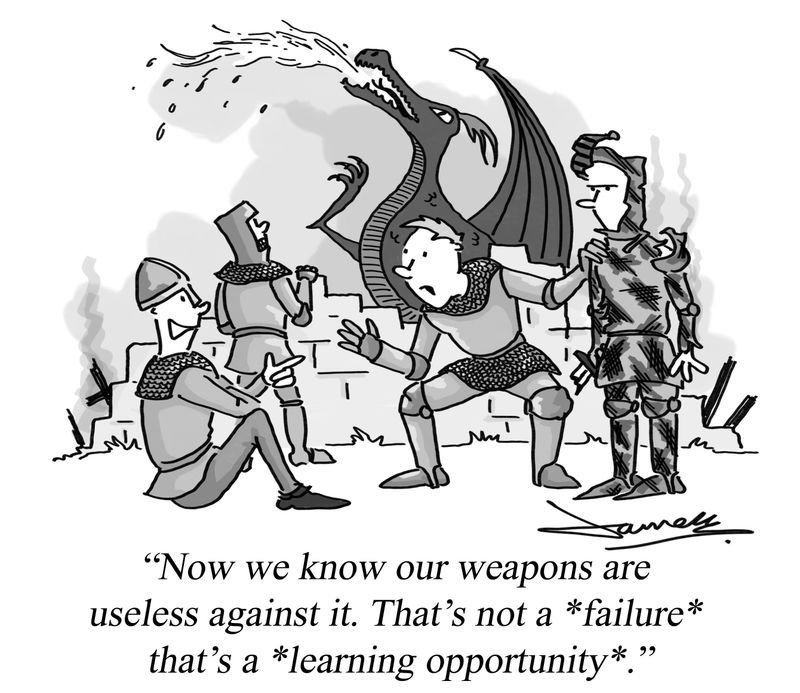
A setback only becomes a failure when nothing is learned from it. Resilient leaders analyze what happened and use what they learn to adjust their approach before trying again. This ability to recover and apply what we learn is an important part of perseverance. The best teams are the ones that fail and learn from those mistakes because they were willing to take a chance in the first place.

Self-Assessment: Turning Setbacks into Strengths
Please take a few moments to reflect on the following questions. Where can you identify opportunities for growth in your leadership?
When something doesn't go as planned, can I acknowledge my disappointment without allowing it to determine what I do next?
Do I notice when one setback causes me to make broader assumptions about my ability or the situation?
Can I separate an unsuccessful outcome from my value or capability as a leader?
When something fails, do I look honestly at what contributed to the outcome without focusing primarily on blame?
Am I willing to reconsider my interpretation of a setback when the facts don't fully support my first reaction?
Do I identify something specific to change after a setback rather than simply promising to do better next time?
When progress is interrupted, can I regain momentum without lowering the standards I expect from myself or others?
Do I help the people I lead learn from setbacks and understand how their strengths can contribute to moving forward?
This self-assessment is a starting point for understanding of Turning Setbacks into Strengths as a leader. Reflect on your responses, identify areas for growth, and use feedback from others and your ECFL Leadership Coach to guide your development.


When setbacks occur, it's easy to focus on the idea that we "lost." One useful way of viewing setbacks comes from author John Maxwell's concept of win or learn: instead of seeing a setback only as a loss, see it as information. Either the outcome goes your way, or it hands you something to use next time. Treat your mistakes as data and let what you learn influence what you do next.
This type of thinking is an example of cognitive reframing, a psychological technique rooted in Cognitive Behavioral Therapy (CBT). Cognitive reframing asks us to examine how we're interpreting a situation and consider whether there's a more useful way to view it. Our first reaction after a setback can quickly influence the conclusions we draw about what happened.
The goal of cognitive reframing isn't to force us to be “positive” about a situation. Instead, we’re questioning our initial interpretation and asking if adopting another perspective may help us respond more constructively.
“I have not failed. I’ve just found 10,000 ways that won’t work.”
Research supports a connection between reframing and resilience. A 2024 meta-analysis examining 55 studies and nearly 30,000 participants found that greater use of cognitive reappraisal was associated with greater personal resilience. Cognitive reappraisal, or reframing, involves changing how we interpret stressful or difficult experiences. While it’s typically discussed in therapeutic settings, the technique has real benefits for leaders.
Our initial evaluation of a setback isn't always accurate, usually because it’s influenced by negative feelings. These patterns of thinking that can influence how we interpret a setback are known as Cognitive Distortions. Here are some examples of what this can look like:
Filtering: Focusing so heavily on one negative part of the situation that other relevant information gets overlooked. The presentation went terribly because I stumbled over one of the questions.
Polarized Thinking: Viewing the outcome as either a complete success or a complete failure, with little room for anything in between. We missed the target, so everything we tried was a failure.
Overgeneralization: Using one setback to draw a much broader conclusion, such as assuming one failed attempt means the entire idea will never work. We tried this once and it didn’t work, so there’s no point trying again.
Catastrophizing: Assuming the setback will lead to the worst possible outcome or become a much larger problem than the facts currently support. If we don’t fix this immediately, the whole project is going to fall apart.
Personalization: Taking excessive responsibility for an outcome that may have been influenced by several factors. The project missed its deadline, so I must have failed as the leader.
Blaming: Focusing primarily on who caused the problem rather than understanding everything that contributed to it. None of this would have happened if they had just done their part.
Emotional Reasoning: Assuming that because you feel defeated or discouraged, the situation must be as bad as it feels. I feel like we’ve completely lost control and there’s no way to recover.
Control Fallacies: Believing either that you have no influence over what happens next or that you should have been able to control every part of the outcome. There's nothing I can do now because the decision is out of my hands; I should have seen this coming and stopped it.
Reframing doesn't erase the setback, but it can help us separate our initial reaction from a more accurate understanding of what happened. The next time you face a setback, pay attention to your initial reaction. Can you recognize any of these distortions in your thinking?

When projects fail, markets shift, strategies misfire, or teams face stress, teams look to their leaders for direction. Coaching them through these setbacks requires resilience and thoughtful communication. More importantly, we need to lead our teams in understanding what we can learn from a setback, because the same cognitive distortions we experience individually can show up in how our teams process setbacks. Leaders can help reframe these conversations without minimizing the disappointment or pretending the fallout wasn't significant.
For example:
The whole thing was a failure.
Instead, ask: “Which parts didn't work, and is there anything from the attempt we can still use?”
Nothing we try ever works.
Instead, ask: “What specifically didn't work this time, and what have we learned that changes our next attempt?”
This is going to derail everything.
Instead, ask: “What do we know has been affected, and what can we still influence from here?”
Whose fault was this?
Instead, ask: “What factors contributed to the outcome, and what do we need to address before we try again?”
“You build on failure. You use it as a stepping stone. Close the door on the past. You don’t try to forget the mistakes, but you don’t dwell on it. You don’t let it have any of your energy, or any of your time, or any of your space.”
Reframing the conversation helps the team move from reacting to the setback toward understanding it. Our job as leaders isn't to supply a positive spin. Instead, we ask questions that bring the discussion back to the facts. We can also:
Focus on Individual Strengths: A setback can reveal strengths that may not have been as visible under normal circumstances. Create opportunities for team members to discuss what they do well and how those abilities might help with the current challenge. When people understand what they can contribute, they have a clearer role in helping the team recover.
Set Aside Time to Regroup: Hold a debrief after a setback and give people the opportunity to examine what happened without turning the discussion into an exercise in blame. Ask what worked and what needs to change.
Provide the Proper Support: A setback may expose the need for additional resources or guidance. Consider what each team member could benefit from most, whether it’s access to the right resources or direct coaching from you.
Celebrate Progress: Acknowledge the contributions people make as the team regains momentum, especially when someone applies a new skill, solves a persistent problem, or helps others keep moving.
Helping a team recover doesn't mean removing every difficulty for them. Resilient leaders who want to build resilient teams provide enough support to help people regain their footing without taking over for them.


Perseverance isn’t something we can do alone. As much as we need encouragement, we also need accountability. People who challenge us to stay the course, adjust our strategies, and call us out when necessary are crucial to building resilience. Here are some Best Practices for helping you and your team overcome setbacks:
Use the 3 R’s Approach: When facing a setback, the three R’s provide a simple process for working through what happened without allowing frustration or disappointment to determine your response.
Reflect: Take time to analyze the situation honestly. What went wrong, and what role did different factors play? Consider your own responsibility without making the reflection an exercise in blame.
Reframe: Instead of focusing only on the failure, ask, “What did this teach me?” or “What can I take from this experience?”
Rebound: Use what you learned to decide how to move forward; turn what you learned into an action plan.
Separate Setbacks from Self-Worth: It’s easy to turn “I failed at something” into “I’m a failure,” especially when the outcome was important to you. A setback reflects what happened in one situation; it doesn’t define your ability or potential. Avoid attaching permanent labels to temporary outcomes, and treat the experience as something you can learn from rather than evidence of who you are.
Turn Lessons into Lasting Improvements: Once the immediate setback has passed, make sure the lesson doesn't disappear with it. Identify what should change because of what happened and make that adjustment specific enough to act on.
Encourage Reflection and Reframing: Your team can’t grow from failure if people are afraid to examine mistakes honestly. As a leader, you set the tone by how you respond when something goes wrong. Share lessons from your own setbacks when appropriate and make it clear that people are expected—and encouraged—to learn from mistakes.
Think about something meaningful you’ve accomplished. Chances are, the path wasn’t exactly what you expected. There may have been setbacks that forced you to reconsider your approach or your team’s approach along the way. How might the end result have been different if that setback hadn’t occurred? Looking back, what did you take away from that experience that you might not have learned otherwise?
Now think about a setback you’re facing today. What can you take from what has already happened, and how can you use it to decide what comes next?

Strengthen your understanding of Turning Setbacks into Strengths by sticking with the following resources. Use this opportunity to note new insights and adhere to practices that will enhance your leadership journey.
Why Every Leader Needs To Learn To Reframe
Dogs Teach Us About Perseverance, Loyalty, and the Power of Teamwork
