
Visible Leadership
Think about what happens when the power goes out, and you can't see what's going on around you. It can be unsettling, especially in an unfamiliar place where you don't have your bearings.
Something similar happens when the people we lead don't understand what's happening around them. They become cautious. They hesitate to speak up or ask questions because they're still trying to make sense of unfamiliar territory. What they need is something to orient by, and that's what visible leadership provides.
Visibility is often understood as attendance at meetings and presence in company communications, but it's really about how you show up in the moments that matter, from routine decisions to a crisis. People respond to what they observe in real time, not to what they're told or promised in company slogans. This means visibility is less about being seen and more about being someone people can count on.

Self-Assessment: Visible Leadership
Please take a few moments to reflect on the following questions. Where can you identify opportunities for growth in your leadership?
Do the people I lead know what to expect from me?
Am I present where the work actually happens, or mostly in meetings about it?
When something is unclear, do people come to me, or do they wait and work around it?
Do I take time to understand a situation before responding to it?
Does my behavior match what I tell people is important?
Am I aligned with other leaders in ways my team can observe?
When I'm not in the room, do people know how I'd want something handled?
Do my reactions make people more likely to bring problems to me, or less?
This self-assessment is a starting point for understanding Visibility as a leader. Reflect on your responses, identify areas for growth, and use feedback from others and your ECFL Leadership Coach to guide your development


Visibility in leadership is the practice of being present in ways others can read and rely on. As part of transparency, visible leadership helps others understand how decisions are made and how standards are applied. Being available is the starting point, though what people actually take from it is how you show up once you're there.
A visible leader doesn't rely on their title or role. Trust is built through consistent actions and regular contact with the people we lead. Paying attention to how we show up is part of this. Tone, timing, body language, and how well we listen all affect whether people feel comfortable bringing us questions or concerns. When our behavior matches our words, people are more likely to take us seriously.
Here's what this might look like on an ordinary day:
Someone finishes a difficult stretch of work well. You go to where they did it and tell them what specifically was good about it, rather than sending a note later that week.
You see a standard being cut on a busy day. You address it right then, in a way that doesn't embarrass anyone, instead of adding it to a list for a review months out.
A team member gives you a short answer that doesn't sound like them. You ask a second question instead of accepting the first answer and moving on.
You're walking through and someone starts to ask you something, then says it can wait. You stop and ask anyway.
You watch how a report actually gets put together and realize it takes three times longer than anyone above you thinks it does. You find out why before you ask anyone to speed it up.
“Transparency reduces uncertainty. When leaders openly share information, explain decisions, and model consistent behavior, employees feel valued, included, and confident in leadership.”
Our responsibilities extend beyond our own presence. We're also working to create a culture where transparency and fairness are the norm and people feel secure. Part of that is how we engage with other leaders, since our teams are watching those interactions and can see whether we're aligned around the same priorities and standards.
Visibility shows up in a few different ways:
Transparency with communications, which means sharing relevant, timely, and useful information so people can do their jobs well.
Visibility around difficult decisions, since people who understand the rationale behind a decision align their work more effectively and feel more respected.
Clarity about projects and priorities, so people know what matters right now and why.
Visibility works in more than one direction. Your team needs to be able to read you, and you need to be able to read them, which is harder, because they're deciding how much to show you based on what they've learned about how you take things. Your peers and your own leadership are reading you as well, on a different set of questions than your team is.


Leaders used to have some separation between how they behaved and what people knew about it. What happened in one setting was more likely to stay in that setting. Digital communication has narrowed some of that separation, and behavior in one setting can now reach people who weren't part of it. Researchers call this blurring of audiences and settings context collapse, where different parts of our lives become harder to keep separate. A 2021 study from MIT Sloan Management Review and Cognizant concluded that leaders are now more accountable, and have to be more transparent, than ever before.
This means people may learn something about you from moments you weren't necessarily considering part of your visibility. Consistency becomes more important because inconsistency gets noticed.
Being visible often isn't enough on its own. A leader who is frequently visible but inconsistent in tone or decision-making creates uncertainty, since people can't predict which version of you they'll get. Consistent behavior gives people clearer signals about what to expect, but they still need enough contact with us to see those patterns for themselves.
Regular presence can help create this contact. A 2025 evaluation at the Veterans Affairs Bedford Healthcare System looked at a leader-rounding program six months in, where leaders spent scheduled time in frontline work areas. Most of the leaders surveyed considered the practice beneficial, and greater visibility and opportunities to engage with frontline employees were among the benefits they identified. The study was small, but it points to the value of making direct contact with employees a regular part of leadership rather than something reserved for problems.
“Leadership is an action, not a position.”
Researchers call the match between what a leader says and what they do behavioral integrity. A 2026 time-lagged field study of 285 employees and 87 leaders found that greater behavioral integrity was associated with greater trust in the leader. That trust, in turn, was associated with less defensive silence, meaning employees were less likely to withhold information to protect themselves. Consistency isn't only about credibility; it can affect what people are willing to tell you.
This is also why visibility isn't solved by simply adding meetings or sending more updates. People need contact with leaders that gives them something useful to work with. Being present gives us opportunities to listen, understand what's happening, answer questions, and clarify our priorities and standards. More contact only helps when the contact itself has value.
Pressure is where this gets difficult, since the demands on your attention rise at the same time the people you lead need more from you. Maintaining the same level of presence and consistency can become harder when you're under strain, which makes those moments especially important. We cover this in Staying Grounded Under Pressure.

Improving your visibility is less about increasing exposure and more about strengthening behavioral consistency in moments that are already visible.
Here are some best practices to help you do that:
Be Present Where the Work Happens: Spending time close to the work helps leaders understand what people are managing each day. Direct presence gives us a clearer view of where decisions are made and where support is needed. When others see us present in routine moments, credibility grows because our involvement reflects genuine attention to the work.
Observe Before You Direct: Before offering direction, take time to understand the situation. A concern that appears simple from a distance may involve unclear expectations or competing priorities. Careful observation produces better judgment because our response is based on what is happening rather than what we assume is happening.
Be Approachable in Everyday Moments: Approachability grows through small interactions, including how fully we listen and how patiently we respond. People remember whether a leader seemed available in routine moments, and those moments influence whether they speak up later. Visibility has greater value when people feel comfortable bringing questions or concerns forward.
Use Visibility to Identify Barriers Early: Staying connected to the work helps leaders notice barriers before those barriers affect results. Repeated questions, missed connections, delays, or confusion around priorities can reveal where support is needed. Visible leaders pay attention to these patterns and use what they learn to help people solve problems sooner.
Make Leadership Alignment Visible: Consistent priorities across leadership give people clarity. Alignment becomes visible when leaders support shared expectations and communicate in ways that reduce confusion for the team. Different leadership styles can still support the same direction when standards remain clear and consistent.
Demonstrate Visible Commitment to Standards: Leaders show commitment through what receives our attention and response. When respect, safety, quality, accountability, or teamwork matter, our actions need to make those standards clear during everyday work. Teams trust standards more when leaders consistently support them through action.
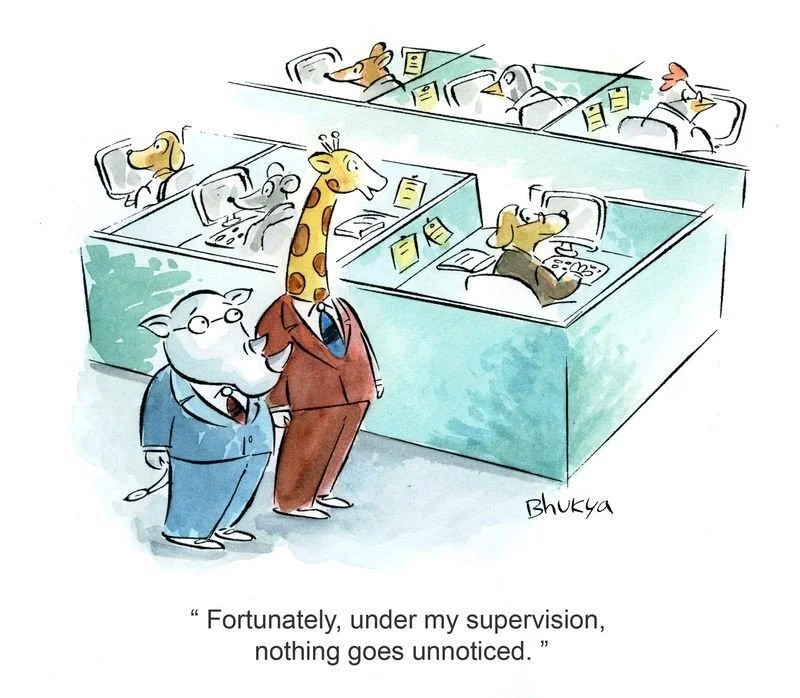
Our presence as leaders should create confidence. Nobody needs the lights on all the time, but they do need to know that when they look for us, we'll show up. This month, notice which moments you're counting as visibility and which ones you're not. Being present is one half of it. What would it take to be more transparent in these moments?

Strengthen your understanding of Visible Leadership by sticking with the following resources. Use this opportunity to note new insights and adhere to practices that will enhance your leadership journey.
Why Visibility And Advocacy Are Non-Negotiables For Leaders
Sources:
How Much Do We Trust Remote Managers? Examining Follower Trust, Construal, and Performance - Golden
