
Creating an Ownership Culture
Ownership can't be created through instruction alone. A leader can set expectations, clarify responsibilities, assign tasks, and model ownership, but whether people actually take it depends on what their environment teaches them over time. That's why building a culture of ownership matters.
When this kind of culture is missing, people often do what's assigned and nothing more. Problems can sit longer than they should because no one's sure who's responsible for addressing them. Leaders end up carrying more than they need to because their teams have learned to wait for direction instead of taking initiative. Building an ownership culture begins with leaders noticing these patterns in the people they lead and examining what their own responses may be reinforcing.

Self-Assessment:
Creating an Ownership Culture
Please take a few moments to reflect on the following questions. Where can you identify opportunities for personal growth in your leadership?
Do I make responsibilities and decision-making authority clear enough for people to act without seeking unnecessary approval?
When someone takes initiative, do I give them room to use their judgment without stepping in or overruling them too quickly?
When a reasonable decision leads to an imperfect outcome, do I support the person’s judgment and keep them involved in deciding what happens next?
When a mistake or problem occurs, do I ask questions to understand what happened rather than looking for someone to blame?
Before focusing on what someone else should have done, do I examine how my own expectations or responses may have contributed to the situation?
Do I involve the people closest to a problem in shaping the response rather than solving it entirely on my own?
Do I recognize when someone’s initiative or judgment contributes to a positive outcome, rather than discussing ownership only when something goes wrong?
Have my leadership choices created an environment where people feel able to speak up and act when something needs attention?
This self-assessment is a starting point for understanding Ownership. Reflect on your responses, identify areas for growth, and use feedback from others and your ECFL Leadership Coach to guide your development.


How do leaders create an environment where ownership takes root in the people they lead? A healthy ownership culture depends on a few basic conditions:
A healthy ownership culture depends on a few basic conditions:
Defined Responsibilities: People need to know what tasks fall under their purview and how far their authority extends. Clear lanes make it easier to take initiative because people can act without worrying about where they might overstep.
Empowered Action: Ownership increases when people can make the decisions their responsibilities require. A team member who is trusted to manage their work and exercise judgment instead of only following instructions is more likely to stay invested in the outcome.
Constructive Accountability: How leaders handle mistakes determines what people learn from them. A punitive approach encourages self-protection and may lead people to withdraw, while a growth-oriented approach keeps them engaged in improving their work.
Leader Consistency: An ownership culture rests on the behaviors leaders reinforce daily. When leaders overrule decisions too quickly or repeatedly step in to correct other people's mistakes, people learn to hold back. When leaders ask questions, support good-faith efforts, and follow up on concerns, ownership becomes part of the culture.
As leaders, we create this culture through visible, repeated efforts. When someone takes initiative, others notice whether that effort is supported or overridden. When a problem comes up, the people we lead notice how we respond. Do we take a growth-oriented approach that encourages responsibility and shows appreciation when someone speaks up? Or do we respond punitively, focusing first on who is at fault? Our responses teach people whether taking ownership is worth the risk.
The following examples show how everyday leadership situations can shape an ownership culture, for better or worse:
1. A supervisor is frustrated because employees seek approval for every small decision. During a meeting, the supervisor tells them to show more initiative. Someone points out that past decisions have often been changed or criticized after the fact. The supervisor realizes that the group's hesitation is partly a reasonable response to those earlier corrections.
2. A team member makes a reasonable decision within their authority, but the outcome creates an unexpected problem. Senior leadership is unhappy, and the supervisor must decide whether to stand behind the employee’s judgment or distance themselves from the decision. How the supervisor responds teaches everyone whether responsible decision-making is supported when the outcome isn’t perfect.
3. An employee is responsible for meeting a deadline but must seek approval for every adjustment. When the work falls behind, the leader holds the employee responsible without recognizing that the approval process prevented timely action. The employee is accountable for the result without having the authority needed to influence it.
4. A leader repeatedly steps in because they can resolve problems faster than the group. Over time, people stop examining issues for themselves and begin bringing every decision to the leader. The immediate work gets completed, but the leader has unintentionally trained the group to depend on them.
These examples show that an ownership culture takes more than telling people to take responsibility. Leaders need to examine their own choices first and consider what those choices are teaching others. Building a culture of ownership begins with setting the example ourselves.
“People support what they help create.”

The concept of Extreme Ownership was developed by leadership consultants and former Navy SEAL officers Jocko Willink and Leif Babin. Whatever happens on our watch belongs to us, including outcomes we didn't personally cause.
When something goes wrong, the first question is what we did, or didn't do, that made it possible. Blame is more comfortable because it puts the problem somewhere else, and Extreme Ownership takes that option away. Maybe our expectations weren't clear. Or maybe we waited too long to address something or failed to provide the information someone needed. Even when we didn't create the problem, our response to it belongs to us the moment we learn about it.
Extreme Ownership also leaves room to recognize circumstances outside our control. Leaders don't control every decision other people make or every problem that develops. The discipline lies in identifying what belongs to us and acting on it.
Ownership isn't only for the times when things don't go as planned. Recognizing how our judgment or follow-through contributed to a positive outcome helps us understand what worked, so we can build on it. Taking ownership of success isn't the same as claiming all the credit. We can acknowledge and take pride in our contributions while also recognizing the efforts of others.
Practicing Extreme Ownership includes:
Acknowledging our mistakes without burying them under excuses.
Examining how our decisions contributed to the current result.
Recognizing what we did well and understanding why it worked.
Taking responsibility for finding a solution within our authority.
Learning from what happened so we can respond more effectively next time.
“When a team takes ownership of its problems, the problem gets solved. It is true on the battlefield, it is true in business, and it is true in life.”
The four situations described earlier look different when a leader operates from this standard:
The supervisor frustrated by constant approval-seeking owns the record that created it. Rather than asking for more initiative, they say plainly that they've been changing decisions after the fact and commit to stopping.
The supervisor whose team member made a sound decision with a poor outcome answers to senior leadership directly. The decision fell within the authority they granted, so the result is theirs to explain.
The leader whose employee missed a deadline examines the approval process first. They built it; it prevented a timely adjustment, and that belongs to them before it belongs to the employee.
The leader who solves problems faster than the group owns the dependence they trained. Stepping back will slow things down at first, and that cost is theirs to absorb.
The same principle applies throughout our professional and personal lives. At work, Extreme Ownership may ask us to recognize that unclear communication contributed to a missed deadline or to identify which choices supported a successful outcome. At home, it may ask us to consider how avoidance or assumptions affected a disagreement. The circumstances may be different, but the first step remains the same: examining ourselves with honesty.

An ownership culture is built through repeated leadership choices. These best practices focus on the daily behaviors that help people take responsibility for their roles and results:
Best Practices for Creating an Ownership Culture:
Give People Room: Let people manage their responsibilities without stepping in too quickly. Coaching and support have their place, but people often need space to think through an issue and learn from the process.
Respond with a Curious Mind: When something goes wrong, begin by asking what happened and what needs to change. Curiosity helps you understand the issue before you decide how to act, and it keeps the team member involved in fixing what went wrong.
Set the Limits Up Front: Make clear which decisions people can make independently and when they need to check in. People are more likely to act when they understand what success looks like and where their authority ends.
Involve People in the Problem: When a problem comes up, involve the people closest to the work instead of solving it entirely on your own. Ask what they are seeing and give them a meaningful role in shaping the response. This helps people understand that ownership includes contributing to solutions rather than only following instructions.
Protect Ownership After the Fact: When someone makes a good-faith decision within clear boundaries, stand behind their judgment, even when the outcome needs adjustment. Review what happened and make any necessary changes without treating a reasonable decision as a failure of ownership.
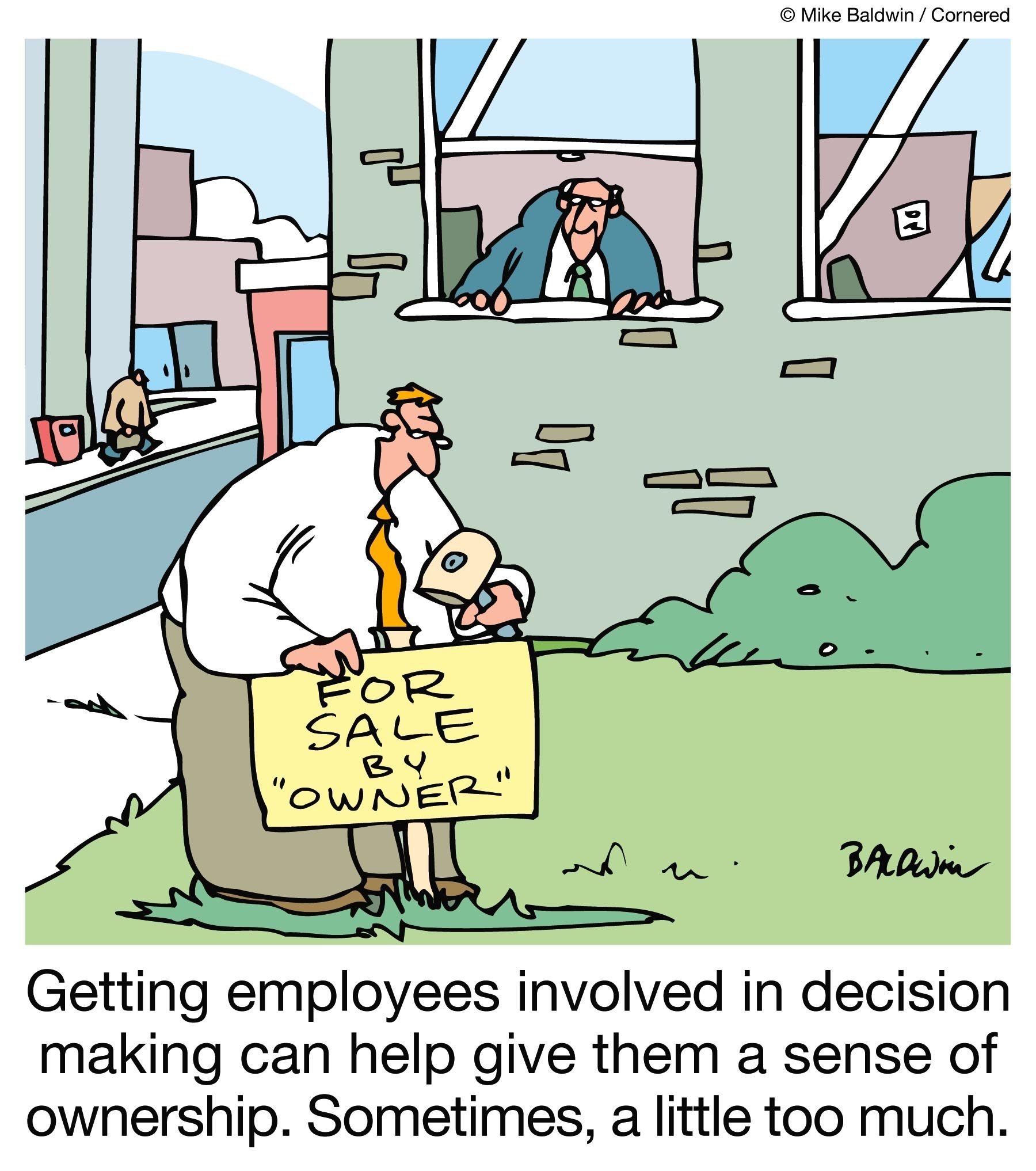
Creating a culture of ownership asks us to watch how responsibility gets handled, not just whether the work gets finished. What people learn from us is rarely what we say about ownership. It's what we do the next time something goes wrong.
This month, pick one moment where you stepped in too quickly, overruled a reasonable decision, or corrected something you could have let stand. Name what your response taught the person, then decide what you'll do differently the next time it comes up.

The journey doesn't stop here. Venture beyond and learn more about Ownership with these resources.
Extreme Ownership: How Leaders Can Transform Business Culture with Radical Responsibility
How to Build Organizational Ownership and Accountability
What's the Difference Between Ownership and Accountability? Claire Wasserman Answers