
Self-Awareness for Accountability
Self-awareness is like the mirror you hold up to yourself—the ability to recognize and understand your emotions, thoughts, and actions, and how they shape your decisions and relationships. When you're self-aware, you know how your behavior affects the people you lead, and you can make intentional choices that align with your values. This is essential for building trust and taking accountability for your actions.
Being self-aware doesn't mean having everything figured out. It does mean being open to learning, adjusting, and growing. Leaders who practice self-awareness can identify their own strengths and areas for improvement and recognize the same in the people they lead. Understanding your emotions and actions helps you navigate each day with clarity and authenticity, whether you're managing your own responsibilities or leading your team.

Self-Assessment:
Self-Awareness for Accountability
Please take a few moments to reflect on the following questions. Where can you identify opportunities for personal growth in your leadership?
Do I regularly pause to consider how my words or actions impact the people I lead?
How often do I notice and understand my emotional reactions throughout the workday?
Can I accurately name my strengths and areas I'd like to improve?
When someone gives me feedback, am I open to it, or do I find myself feeling defensive?
Do I recognize when stress or frustration is influencing my decisions or interactions?
How comfortable am I admitting when I'm wrong or when I've made a mistake?
Do I seek feedback proactively to help uncover things I might be missing about myself?
Do my interactions and responses match the kind of person and leader I want to be?
This self-assessment is a starting point for understanding Self-Awareness for Accountability. Reflect on your responses, identify areas for growth, and use feedback from others and your ECFL Leadership Coach to guide your development.


Accountability begins with understanding yourself. Leaders who aren't self-aware often miss the impact of their behaviors, making it difficult to take responsibility for their actions. Without this awareness, you might overlook your blind spots or find yourself repeating mistakes instead of learning from them. Reflecting on your actions regularly helps you notice patterns, manage your reactions, and take intentional steps toward improvement.
Seeing Your Blind Spots
Without self-awareness, it's easy to unintentionally get in your own way as a leader. When someone points out a problem or a mistake you've made, do you:
Feel defensive and rush to justify your actions?
Become frustrated and tune out the feedback?
Assume the other person misunderstood your intentions?
These responses are natural, but they can block accountability. With self-awareness, you can pause, reflect, and ask yourself:
What can I learn from this feedback?
Could there be some truth I'm reluctant to acknowledge?
How can I use this insight to improve my decisions and actions?
Practicing self-awareness helps you move away from emotional reactions and toward productive learning opportunities.

Building Better Relationships
Have you ever worked alongside a leader who didn't realize how their actions affected their teams? Maybe they unintentionally shut down conversations or ignored valuable input. A lack of self-awareness can undermine trust and create unnecessary tension.
Leaders who cultivate self-awareness:
Notice how their emotions affect the people they lead.
Build trust by staying consistent and approachable, even when conversations get difficult.
When you understand how your presence affects your team, you can build trust and improve those working relationships.
“Exhibiting accountability over time is a gateway to trust. When we see someone acting with accountability, we gain the evidence we need to trust them.”
Adapting Through Accountability
Every situation you encounter is different, and self-awareness allows you to adapt your response effectively.
Accountable leaders know how to:
Recognize when a different approach is needed.
Accept responsibility when something isn't working and proactively seek solutions.
Learn from their mistakes to avoid repeating them.
For instance, if someone on your team says your decisions feel rushed, an accountable leader would pause, reflect, and consider how to improve their decision-making process.
A missed deadline works the same way. Instead of pointing to what got in the way, an accountable leader stops to ask what actually caused it. Was it poor planning, unclear priorities, or something outside your control? Naming the real cause is what keeps the mistake from repeating itself, and your team notices when you do it. Seeing you look for the cause instead of a defense shows them what accountability looks like in practice, and it makes them more comfortable taking ownership of their mistakes.
Think about the last time something didn't go as planned. Did you stop to ask what actually caused it, or did you move straight to fixing it?

Unintentionally Unapproachable
Erica, a supervisor, always considered herself approachable and supportive. She valued efficiency and liked giving quick, clear answers, assuming her team appreciated her straightforward style. If someone had an issue, she expected they'd just speak up.
After a recent feedback session, Erica was surprised by comments like, "Erica seems too rushed to really listen," and "I sometimes feel like Erica doesn't want to be bothered with my questions." Erica felt puzzled; she'd always encouraged her team to approach her whenever needed, so why were they hesitant?
That night, Erica settled in front of the TV and landed on a show following a manager who ran his team the way she ran hers: direct, efficient, no wasted words. She caught herself nodding along, recognizing her own style in his. Then the scene cut to his team venting about him after hours. "He's always too rushed to actually listen," one of them said. Another added that she'd stopped bringing him small problems because she didn't want to be a bother. Erica felt the recognition curdle. Wait… Do mine feel that way about me?

The Self-Awareness Moment:
The next morning, Erica began paying closer attention to her own interactions. When someone stopped by her office to talk through a problem, she kept answering emails at the same time, confident that since she was good at multitasking, she might as well put the extra minutes to use. Once she thought she had the gist of what someone needed, she jumped straight to the fix, sometimes before they'd finished explaining, the same instinct that made her decisive everywhere else in her job. The moment she'd given her answer, she considered the conversation done and moved on to the next thing without asking if there was anything else.
She'd always seen all three as the same efficiency she'd recognized in the manager the night before. But from the other side of her desk, half her attention on email read as not really listening. Cutting people off mid-explanation read as too rushed to hear them out. Ending the conversation the second she'd answered read as exactly what made his team stop bringing him anything small. The leadership style she'd been proud of was the same one making her team hesitate to knock on her door.
Determined to improve, Erica made deliberate changes. She closed her laptop when someone stopped by instead of splitting her attention, let people finish explaining before she jumped in to solve it, and asked if there was anything else before ending a conversation. Within weeks, her team seemed more comfortable approaching her, shared more openly, and appeared more relaxed during interactions.
The lesson: Erica discovered self-awareness isn't only about what you say but also about how your actions affect those around you. Leaders with strong self-awareness pay attention to what their tone, body language, and communication style are actually telling the people they lead.
“In the long run, we shape our lives, and we shape ourselves. The process never ends until we die. And the choices we make are ultimately our own responsibility.”
Self-awareness doesn't develop on its own. It takes a regular habit of checking in with yourself. Set aside 15 to 20 minutes once a month for a personal check-in, a conversation with yourself about how you're showing up at work and with your team. Find a setting that helps you think clearly, whether that's a walk, a quiet corner, or coffee before the day starts. The goal is growth, not a list of flaws.
Use this structure to guide the conversation:
Celebrate Wins: Start with what you've accomplished and what you're proud of. Big or small, naming these keeps you motivated to keep going. What went well this month, and how can you build on it?
Address Setbacks: Look at where you fell short without being harsh about it. The goal is to learn from what happened, not dwell on it. What didn't go as planned, and what caused it?
Plan for Improvement: Pick one specific habit or behavior to work on next month. Keep it realistic and focused on small, actionable steps. What's one thing you can adjust to get a better result?
This monthly conversation is also where you'll track the pattern you commit to changing at the end of this lesson, so it's worth building the habit now.


Many people assume they're self-aware, but the truth is it takes practice and reflection to really see ourselves clearly. The good news? Small, consistent habits can make a big difference.
Here are several practical ways to grow your self-awareness at work:
Make Reflection a Daily Habit: Self-awareness improves when you take time to reflect on your actions and decisions. Even five minutes at the end of the day can help you recognize patterns in your behavior. Ask yourself how you handled challenges today, whether you stayed patient and open or reacted emotionally, and how people responded to you in return. If there was conflict or miscommunication, consider what role you played and what you could have done differently. Over time, regular reflection will help you spot trends in your leadership style and identify areas for improvement.
Identify Your Emotional Triggers: Everyone has situations that bring out strong emotional reactions. Some feel frustrated when plans change unexpectedly, while others get defensive when their ideas are challenged. Recognizing these triggers helps you manage your responses instead of reacting automatically. When you feel frustration, stress, or impatience, pause and ask yourself what about the situation is making you react this way, then take a moment to breathe before you respond. Managing emotional reactions allows you to stay present in conversations and make better leadership decisions.
Seek Input from Trusted Colleagues: Even the most self-aware leaders have blind spots. The best way to uncover them is to ask people you trust for their perspective. Choose a mentor or colleague you respect, and ask open-ended questions such as how they experience your leadership or what one thing you could improve in how you communicate with the team. When you receive input, resist the urge to explain or defend yourself. Listen, reflect, and look for patterns instead. Seeing yourself through the eyes of others can help you make meaningful adjustments.
Be Intentional About Your Communication Style: Self-aware leaders understand that how they communicate carries as much weight as what they say. People often react more to your tone and body language than to the words you use. Pay attention to nonverbal signals like crossed arms or avoided eye contact, and notice how your tone changes when you're feeling impatient or frustrated. Before important conversations, consider how you want to come across and adjust accordingly. Simple changes in body language and tone can make a big difference in how others perceive you and how comfortable they feel speaking with you.
Reward Your Accomplishments and Milestones: Growth in self-awareness takes real effort, and it's just as important to recognize and celebrate your wins as it is to put in the work. Leaders, like everyone else, need time to recharge. Celebrating milestones and accomplishments, no matter their size, helps you maintain balance and improve both your personal and professional life. If you hit a major goal, treat yourself to a night out or your favorite meal. If you made progress on a challenging habit, step away to regroup and refresh. Taking intentional breaks keeps you energized and prevents burnout, and reminds you that growth is measured by progress, not just effort.
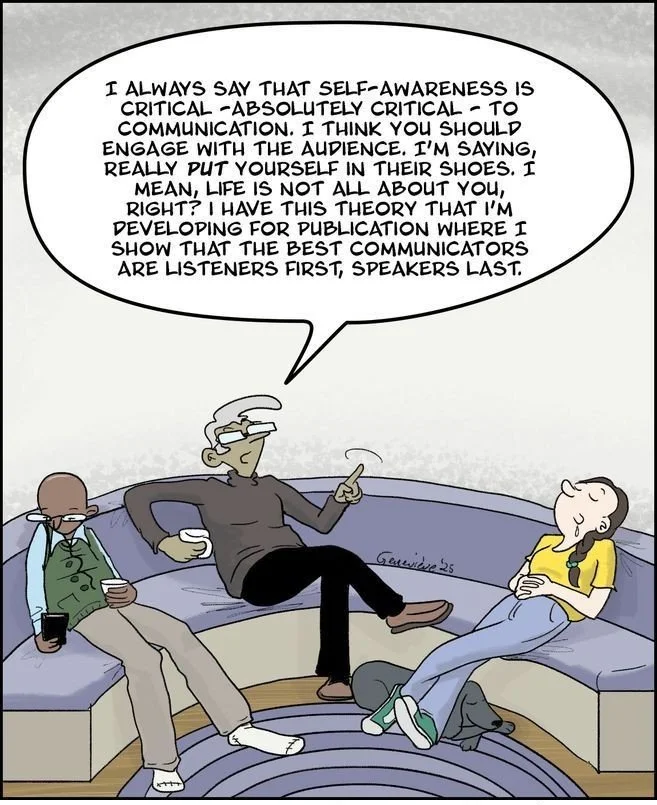
When it comes to accountability, self-awareness is where it all begins, both in how you lead yourself and in how you lead the people who depend on you. The more you understand your emotions, habits, and impact on the people you lead, the easier it becomes to take responsibility for your actions and lead with clarity.
This month, pick one pattern you want to change in how you show up with your team. Bring it into your next self-accountability conversation, track it there, and when you notice real progress, take a moment to acknowledge how far you've come before choosing what's next.

Elevate your understanding of Self-Awareness for Accountability by taking flight with the following resources. Use this opportunity to navigate, uncover, and expand the horizons of your leadership influence.