Courageous Ownership
Some moments ask very little of us beyond routine follow-through. Others make taking the next step much harder. Taking that step may require us to raise a concern, have a difficult conversation, or make a decision before we have every answer. These are the moments when taking ownership requires courage.
Courageous ownership means responding responsibly even when fear or uncertainty makes us hesitate. We still need to understand what’s happening, consider the risks, and decide what the situation calls for. Sometimes that means speaking up or taking action before we feel completely certain. Other times, we may need to slow down, learn more, or be willing to change our approach. Fear may still be present, but courageous ownership keeps it from deciding what we do next. Our response should be guided by what the situation requires and what we’re responsible for as leaders.
Self-Assessment:
Courageous Ownership
Please take a few moments to reflect on the following questions. Where can you identify opportunities for growth in your leadership?
Do I recognize when fear, discomfort, or uncertainty is shaping my response?
When a concern affects someone’s dignity, safety, or fair treatment, am I willing to speak up even when doing so may bring conflict or scrutiny?
When someone shares difficult feedback with me, do I listen without becoming defensive and remain open to what I may need to change?
Before making a difficult decision, do I gather the relevant information without waiting for certainty that may never come?
Under pressure, do I recognize when I am rushing, delaying, avoiding, or deflecting responsibility?
When a short-term fix could create larger problems later, do I consider the long-term effects before deciding how to respond?
Do I recognize when I can act within my authority and when a concern needs to be raised or escalated?
After taking action, do I remain willing to adjust my approach as new information becomes available?
This self-assessment is a starting point for understanding of Courageous Ownership as a leader. Reflect on your responses, identify areas for growth, and use feedback from others and your ECFL Leadership Coach to guide your development.


Ownership calls for three kinds of courage in leaders: moral, emotional, and strategic. These forms of courage arise more often than we might expect as leaders:
1. Moral Courage: This is the willingness to uphold what’s right and address what needs attention, even when doing so may bring conflict or scrutiny. Moral courage asks leaders to protect the dignity, fairness, and well-being of those we lead, especially when remaining silent would allow harmful or unethical behavior to continue.
When we raise a concern others have chosen to ignore or speak up for someone being treated unfairly, excluded, or placed at unnecessary risk, we’re exhibiting moral courage.
2. Emotional Courage: This is the willingness to speak honestly, acknowledge mistakes, and engage in difficult conversations that require humility and directness. Emotional courage asks us to choose honesty and do what’s necessary, even when doing so feels uncomfortable. While these conversations can be difficult, avoiding them allows misunderstandings to fester and relationships to suffer. Emotional courage also asks us to remain open to truths we may not want to hear.
When an employee explains that our communication has created confusion, emotional courage helps us listen without becoming defensive, acknowledge our part, and discuss what needs to change.
3. Strategic Courage: This is the willingness to assess a situation carefully and weigh the risks so we can make informed decisions, especially when we don’t have all the facts. Strategic courage keeps us focused on making deliberate, values-driven decisions instead of choosing reactive solutions. This might look like challenging popular assumptions, turning down opportunities that don’t support the larger mission, or remaining committed to a long-term goal when a quick fix would be easier. Strategic courage also includes investing in preventative systems rather than waiting for a crisis and relying on someone to come in and save the day.
When a decision falls outside our authority, strategic courage may require us to recommend an improvement or raise the concern with someone who can act.
“What I always say is, ‘Do every job you’re in like you’re going to do it for the rest of your life, and demonstrate that ownership of it.’”
Now, consider which form of courage is most central to each situation:
A. A recurring equipment problem could be patched quickly, but the same failure would probably happen again. The leader pauses the rollout long enough to address the underlying issue and reduce future risk.
B. A supervisor notices that an employee is being blamed for a mistake caused partly by unclear instructions. Even though correcting the record may create conflict with another leader, the supervisor speaks up.
C. An employee tells a manager that their communication style makes it difficult to ask questions. The manager listens without becoming defensive, acknowledges the impact, and discusses what needs to change.
Remember that, in practice, these forms of courage rarely operate in isolation. Most situations call for more than one.
Pressure can reveal patterns in how we respond. Some leaders act quickly because taking immediate action feels decisive. Others wait because they want more information or hope the situation resolves itself. Neither speed nor caution alone determines whether a response is courageous. The better question is whether our response reflects what courageous ownership asks of us.
Here are four response patterns that can appear under pressure:
The Rushed Response
A rushed response happens when we act before taking enough time to understand the situation. Acting quickly can look courageous, but speed without enough information can produce a reactive decision instead of a responsible one.
An employee begins explaining that a change to the start-of-shift routine has created a problem accessing the facility. The supervisor assumes the concern is about parking and immediately begins suggesting closer spots or leaving earlier. The supervisor later learns that the actual problem is badge access before the facility officially opens.
The supervisor didn’t slow down long enough to understand what was going on. Strategic courage asks us to resist the pressure to fix a problem before we fully understand it. We need to pause long enough to gather the relevant information before deciding how to respond.
The Delayed Response
A delayed response happens when we recognize that action is needed but continue waiting for more certainty or a better time. Careful preparation is important for strategic courage, but preparation turns into procrastination when we spend time gathering information that won’t affect the next step.
A project lead learns that a supplier issue may affect an important deadline. Enough information is available to alert the people involved and begin discussing alternatives, but the leader waits for a formal explanation before sharing the information with those affected. By the time the issue is raised, the deadline is close, and the available options are limited.
The leader didn’t need to have all the information before speaking up. Strategic courage would have allowed the leader to communicate what was known, explain what still needed to be confirmed, and begin preparing for the possible impact.

The Avoidant Response
An avoidant response happens when we avoid an issue because addressing it may create conflict or require an uncomfortable conversation.
A high-performing employee regularly interrupts coworkers and dismisses their input. The leader recognizes the pattern but worries that confronting the employee may damage the relationship or affect the employee’s contributions. The behavior continues, and other employees become less willing to participate.
Emotional courage asks the leader to hold the difficult conversation with honesty and self-control. Moral courage may also be required because allowing the behavior to continue leaves others unprotected. Addressing the concern doesn’t require hostility, but it does require the leader to explain the impact and create a clear plan for what needs to change.
The Deflection Response
A deflection response happens when we respond to pressure by moving the difficult part of the responsibility to someone else. The immediate problem may be resolved, but the original concern remains unaddressed.
A new employee struggles with an important assignment as a deadline approaches. Rather than coaching the employee through the problem, the manager gives the assignment to someone who can finish it more quickly. The work is completed, but the new employee doesn’t learn how to handle the responsibility and may be no better prepared when a similar responsibility arises.
Under pressure, coaching someone through a mistake may require more courage than handing the work to someone who can finish it quickly. Emotional courage helps the manager address the performance concern directly, while strategic courage keeps the manager focused on developing the employee instead of solving only the immediate problem.
Recognizing these patterns can help us identify what kind of courage a situation requires. A rushed or delayed response may signal a need for strategic courage, while avoidance or deflection may point to a difficult truth or conversation we need to face. Courageous ownership asks us to examine what is influencing our response and choose the next responsible step.
“You cannot escape the responsibility of tomorrow by evading it today.”

With a clearer sense of how we may respond under pressure, these best practices can help us strengthen our practice of courageous ownership.
Best Practices for Courageous Ownership:
Name What You Are Avoiding: Pay attention to the situations you keep putting off. In those moments, fear is normal, and it can lead us to over-explain ourselves or avoid making a choice altogether. Identify what is making the situation difficult, whether it is fear of conflict, fear of being wrong, fear of backlash, or fear of failure. Naming the fear can help us determine whether it is warning us about a legitimate risk or simply making responsible action uncomfortable.
Slow Down to Assess the Situation: High-pressure situations can create a false sense of urgency. Collect yourself enough to assess the situation, look at the facts, and understand any potential risks before you decide what to do next.
Do Your Homework: Gather the best available information, talk to people with relevant experience, and think through the likely outcomes before making a difficult call. Preparation helps us make more informed—and therefore better—judgments.
Plan for More Than One Outcome: Part of being a courageous leader is taking ownership of the risks that come with your decisions, not just the results. Think through what success looks like, what could go wrong, and how you will respond if the situation changes.
Address Problems Early: Courageous ownership includes acting before a problem grows. Early action gives you more options, helps prevent avoidable damage, and keeps small issues from becoming bigger ones.
Stay Humble: Pride and the need to always be right can limit good judgment and shut down better ideas. Courageous ownership includes being willing to rethink what you know, let go of what isn’t working, and adapt as things change.
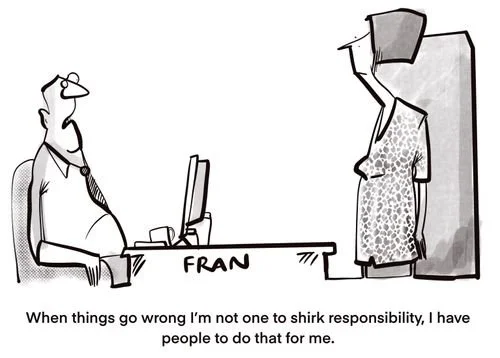
Ownership shows up in the accountability we take for our own work and in the environment we create for those we lead. When the next step feels difficult, courage is what keeps us from retreating. This week, look for one place where you can take fuller ownership and one way you can make it easier for those you lead to do the same.

Elevate your understanding of Courageous Ownership by taking flight with the following resources. Use this opportunity to navigate, uncover, and expand the horizons of your leadership influence.
The Courage to Own It: How Building Collective Accountability Transforms Team Dynamics