Components of EQ
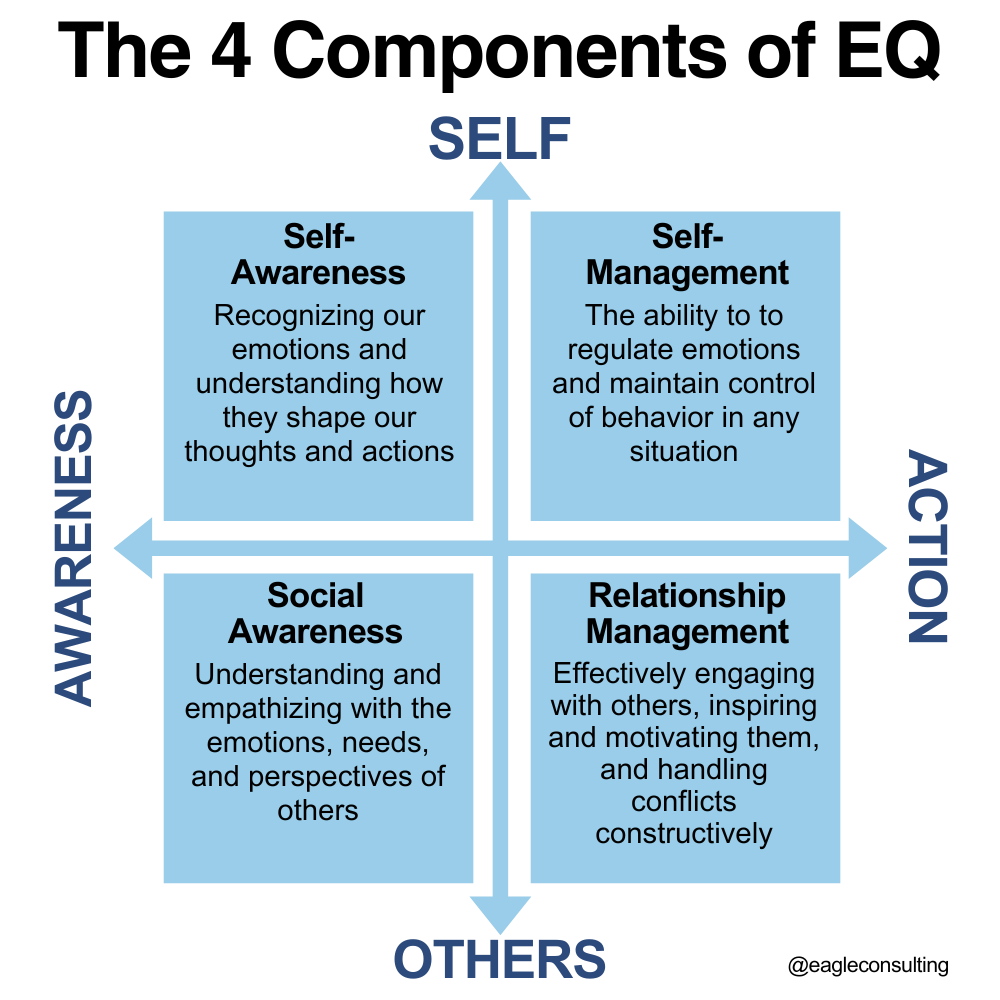
Every leadership decision is influenced by how we understand and respond to emotions, both our own and those of the people around us. Emotional Intelligence helps us recognize what is happening internally before deciding how to respond externally, which is essential to successful leadership. Here we’ll focus on the four components of EQ—Self-Awareness, Self-Management, Social Awareness, and Relationship Management—and how they work together to improve the way we understand ourselves and lead others.
Self-Assessment:
Components of EQ
Please take a few moments to reflect on the following questions. Where can you identify opportunities for growth in your leadership?
Can I identify patterns in my emotional reactions and recognize what tends to trigger them?
Do I actively seek feedback to better understand how others experience my leadership?
When I am frustrated or under pressure, can I pause before reacting?
How consistently do my actions reflect the standards and expectations I set for others?
How well do I recognize when someone needs support, clarification, or additional guidance?
Do I consider how my decisions may affect the people involved before moving forward?
Do I adapt my communication style to fit different people and situations?
When disagreements arise, do I help move conversations toward understanding and resolution?
This self-assessment is a starting point for understanding your Emotional Intelligence as a leader. Reflect on your responses, identify areas for growth, and use feedback from others and your ECFL Leadership Coach to guide your development.


Emotional Intelligence (EQ) consists of four key parts: Self-Awareness, Self-Management, Social Awareness, and Relationship Management. Each component contributes to how leaders understand themselves, work with others, respond to feedback, navigate challenges, and so on. Together, they provide a framework for recognizing emotions and responding to them effectively.
Self-Awareness
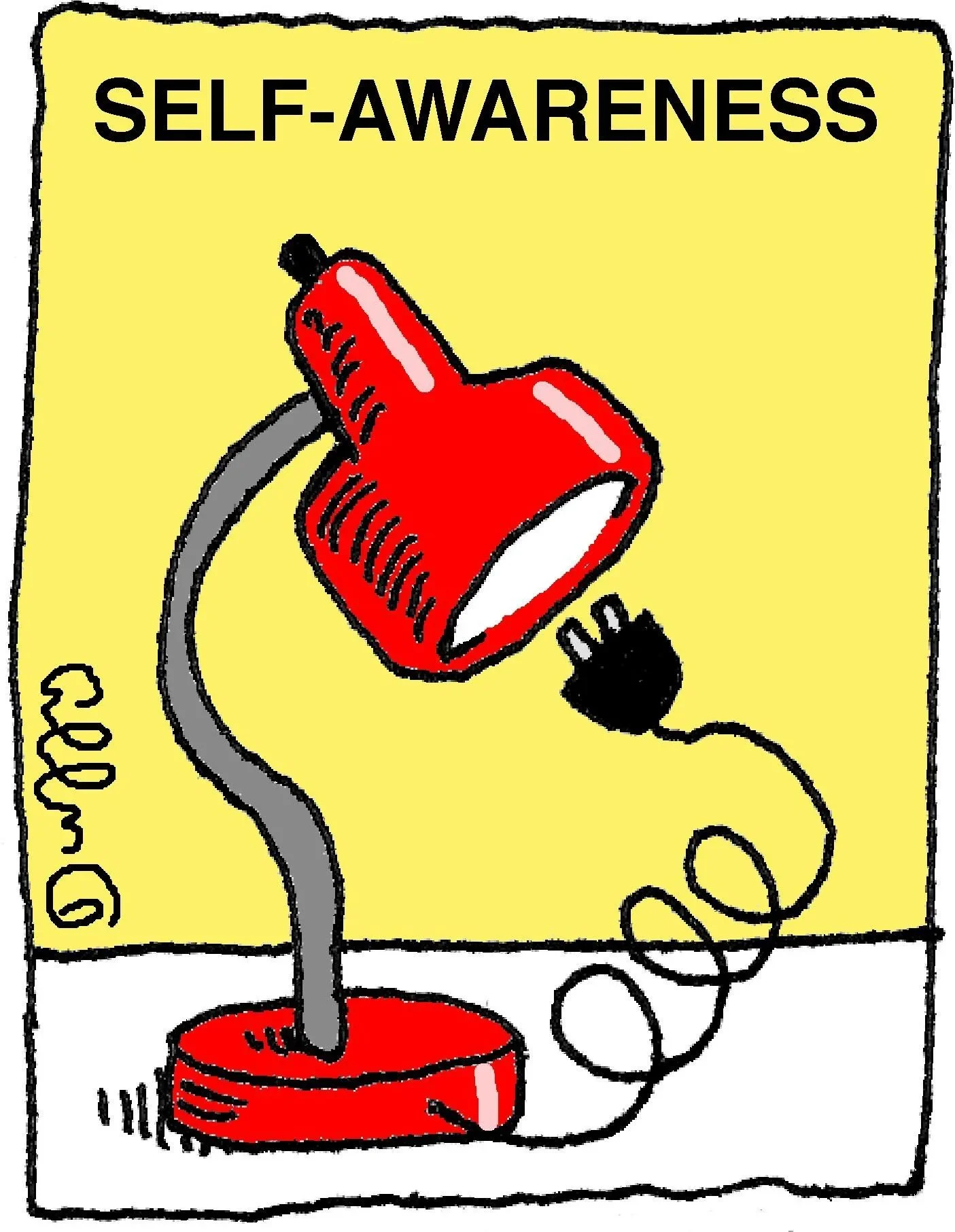
Being self-aware means recognizing how your emotions show up in your leadership before they affect the people around you. Emotions themselves are not a problem, nor do they make someone a poor leader. Self-awareness helps leaders recognize those emotions, understand where they are coming from, and decide how to respond. Developing self-awareness requires honest reflection and a willingness to seek feedback. The more self-aware you are, the better you'll understand when your emotions are shaping your decisions or the way you respond under pressure.
“Knowing yourself is the beginning of all wisdom.”
Aristotle
Self-Management
Self-management builds on self-awareness. Once leaders recognize what they are feeling, they can choose how to respond instead of reacting automatically. Self-management is the capacity to regulate one’s emotions under various circumstances. Leadership often involves stress, frustration, and uncertainty. Leaders with strong self-management can remain calm and think clearly before acting, allowing them to respond in ways that support both their people and the outcome.
”Self-management is more than resisting explosive or problematic behavior. The biggest challenge that people face is managing their tendencies over time and applying their skills in a variety of situations.”
Travis Bradberry
Social Awareness
Being socially aware means recognizing how others may be feeling and noticing what a situation may require from you as a leader. Social awareness calls for paying attention to nonverbal cues and listening closely enough to understand more than just the words being said. Leaders who are socially aware are better able to read group dynamics and recognize when people need clarification or support. Social awareness may not come naturally to everyone, and that’s okay. Like the other components of EQ, it is a skill that can be developed through practice and feedback.
“When you listen with empathy to another person, you give that person psychological air.”
Stephen Covey
Relationship Management
Relationship management is the ability to use awareness of yourself and others to build healthier working relationships. Self-awareness helps leaders understand their own reactions, while social awareness helps them recognize what others may need. Effective relationship management brings those skills into daily interactions by helping leaders handle conflict constructively and create an environment of trust and support.
“The quality of your relationships determines the quality of your life.”
Esther Perel
Together, these four components help leaders understand themselves more clearly and work more effectively with others. Strengthening each area takes practice, but over time, those efforts can improve both your leadership and your relationships.
“75% of careers are derailed for reasons related to emotional competencies, including inability to handle interpersonal problems; unsatisfactory team leadership during times of difficulty or conflict; or inability to adapt to change or elicit trust.”
According to Daniel Goleman, self-awareness is the foundation of Emotional Intelligence because it allows you to recognize and understand your feelings as they happen. Without self-awareness, it’s easy to miss how your emotions shape your thoughts, choices, and interactions with others. Learning to recognize what you feel and why you feel it helps you manage those emotions and understand others more clearly. And that’s where Nate’s story begins.
Nate Shelley was an ambitious leader at Richmond Group, with a strong record of results. Nate was driven and highly focused on achieving his team’s goals. However, there was one aspect of leadership in which Nate fell short: he lacked self-awareness, making it difficult for him to recognize how his behavior affected the people around him.
Despite his impressive track record and accomplishments, he struggled to recognize his own limitations and the impact of his behavior on others. Even though he prided himself on his decisiveness, he often failed to see how his assertive approach alienated his team members.
For example, during a crucial team meeting, Nate proposed a new strategy without seeking input from his team. He bulldozed through objections and dismissed alternative perspectives, convinced that his approach was the only way forward. Unbeknownst to Nate, his team members felt frustrated and marginalized, leading to resentment and disengagement.
As the project progressed, team members became increasingly detached, and feedback about Nate’s leadership became more frequent. Despite the warning signs, Nate attributed the problems to individual shortcomings rather than reflecting on his own leadership style.
Over time, collaboration became more difficult, communication suffered, and trust within the team began to erode. Nate found himself facing growing challenges and struggled to understand why results were becoming harder to achieve.
When a senior team member finally told Nate directly that people didn't feel heard, his first instinct was to dismiss it. But the words stayed with him. That night, replaying the meeting in his head, he recognized something he hadn't been willing to see before: the pattern wasn't in his team. It was in him. His reluctance to acknowledge his own blind spots and seek feedback had hindered his ability to lead effectively.

Determined to improve, Nate began taking a closer look at his own leadership habits. Here’s what Nate did to turn things around:
Conducted a Postmortem: After heated interactions, he reflected on what led to his outburst and how he could prevent it in the future.
Engaged in Self-Reflection: He regularly asked himself questions like, “How do I handle criticism? How does my mood affect my decisions?”
Focused on His Team: Nate began practicing active listening, valuing diverse perspectives, and adjusting his communication style to suit his team’s needs.
Repeated Practice: Building self-awareness is a gradual process, but with time and effort, Nate became a more empathetic and effective leader.
The story of Nate serves as a powerful reminder of the importance of self-awareness in leadership. While ambition and drive are valuable traits, true leadership requires a deep understanding of oneself and the ability to empathize with others. By cultivating self-awareness, leaders can unlock their full potential and inspire those around them to achieve greatness.
Has there been a time recently when your emotions got the best of you? Conduct your own postmortem analysis to figure out how you can react differently next time.
“There is no exercise better for the heart than reaching down and lifting people up. ”

There are many ways to strengthen your Emotional Intelligence. Even small steps make a difference, and the more you practice, the more noticeable the results. Keep sharpening your awareness and applying what you learn; over time, those habits will lead to lasting growth both personally and professionally. Here are a few best practices to help you get started.
Self-Awareness:
Regularly reflect on your emotions, reactions, and behaviors.
Pay attention to how you feel in different situations and how your emotions influence your actions.
Seek feedback from others to gain insight into how you are perceived.
Prioritize self-care that supports emotional well-being and helps you lead from a healthier place.
Self-Management:
Use stress management techniques, such as deep breathing or progressive muscle relaxation, when stress begins to affect your focus.
Practice delaying gratification and impulse control in daily life.
Identify and challenge negative thought patterns or self-talk.
Create a plan for managing difficult emotions before they affect your judgment or communication.
Cultivate resilience by reframing setbacks as learning opportunities.
Social Awareness:
Practice active listening to better understand others’ perspectives and emotions.
Pay attention to nonverbal cues such as body language and facial expressions.
Develop empathy by considering what a situation may look like from another person’s perspective.
Seek out diverse perspectives and experiences to broaden your understanding of social dynamics.
Engage in community service or volunteer work to build connections and empathy.
Relationship Management:
Communicate clearly and honestly so others understand expectations, feedback, and concerns.
Practice assertiveness while also being mindful of others' feelings and needs.
Practice conflict resolution skills, such as active listening and finding common ground, so people feel heard and respected.
Recognize and celebrate others' contributions to help build a positive and inclusive team culture.
Provide constructive feedback and support to help others grow and develop professionally.
Reflection Questions
What are some strategies you currently use to manage stress and stay composed under pressure?
Are there any new techniques you would like to try to improve your self-management?
Think of a time when you successfully understood and empathized with a colleague's perspective. What did you do to achieve this, and how did it impact your relationship with that person?

Elevate your understanding of EQ by taking flight with the following resources. Use this opportunity to navigate, uncover, and expand the horizons of your leadership influence.
Strategies to Become More Emotionally Intelligent
Daniel Goleman (10:31)
4 Ways to Boost Your Emotional Intelligence
Farah Harris
Listen to Daniel Goleman Define Emotional Intelligence (5:31)