Creating Cohesive Teams
We use the word team all the time in business. "Let's work as a team." "We're a solid team here." But calling a group a team doesn't automatically make it function like one.
Team is usually thought of as a noun, something that describes a group. But team can also work as a verb. Teaming is the act of working cohesively and collaboratively. Bringing individuals together as a team is one thing. Getting them to actually “team together” is where real effectiveness begins.
In leadership, teaming begins with everyday trust and clear communication. When you encourage people to work together and stay focused on shared goals, they start to see how their individual efforts fit into something bigger. Over time, your daily choices and behaviors influence whether a group becomes a cohesive team or remains just a set of individuals working side by side.
What does creating cohesive teams require? It starts with three basics: open communication, mutual respect, and a shared sense of purpose. When these are in place, people are more likely to trust one another, take responsibility for their work, and support each other. Together, those habits create a collaborative environment where teams work well and stay connected.

Self-Assessment:
Creating Cohesive Teams
Please take a few moments to contemplate the following self-reflection questions. Where can you identify opportunities for personal growth in your leadership?
Do I actively work to create a safe environment where team members feel comfortable sharing their ideas?
Do I encourage team members to collaborate and leverage each other’s strengths?
Do I invite input from all team members, including quieter voices?
Do I address disrespectful or unprofessional behavior when it occurs?
Do I set aside time for team members to openly discuss their challenges and successes?
Do I give constructive feedback aimed at improvement rather than criticism?
Do I actively listen to team members’ concerns and respond thoughtfully?
Does my team effectively resolve conflict in a way that strengthens relationships and promotes collaboration?
Remember, this self-assessment is just a starting point for understanding your knowledge of Creating Cohesive Teams as a leader. It's essential to reflect on your responses and actively work on areas where improvement is needed. Additionally, seeking feedback from others and working with your ECFL Leadership Coach can provide valuable insights into your strengths and weaknesses.


Let’s begin our focus on creating cohesive teams by looking at open communication.
An environment of open communication in the workplace starts with a genuine commitment to transparency and inclusion. People share ideas and information openly, without hesitation or fear of judgment. Team members feel comfortable and confident speaking their mind, knowing that their contributions will be valued and respected. Open communication strengthens team bonds and drives innovation.
As a leader, there are several things you can do to encourage open communication within your team:
Establish clear communication channels: Ensure that team members know how and where to share their thoughts, whether through regular meetings, shared platforms, or informal check-ins.
Embrace diverse perspectives: Encourage team members to share their unique viewpoints and experiences, where differences are seen as strengths.
Encourage regular dialogue: Facilitate ongoing conversations, both directly with you and among team members, to build trust and strengthen collaboration.
Regular check-ins, constructive feedback, and positive reinforcement help maintain openness, while "open-door" meetings, where every team member is encouraged to share insights, actively support collaboration.
How are you creating a path to open communication?
“The best team is not the team with the best players, but the team that plays best together.”
Our next focus in creating cohesive teams is mutual respect. Mutual respect is the foundation of any cohesive team, building trust and understanding that makes team members feel valued and heard. When respect is present, people feel empowered to share ideas freely, listen attentively, and work through differences constructively.
Mutual respect also reduces conflicts, as individuals are more likely to approach disagreements with empathy and a willingness to find common ground. By acknowledging and appreciating each person's unique skills and perspectives, mutual respect strengthens the team's collective effort and enables diverse individuals to work together as a unified, stronger, and more effective whole.
Are you seeing evidence that your team shares mutual respect? What are you doing to build respect across your team?
Remember, you can encourage mutual respect within your team by modeling respectful behavior in every interaction: listening actively, showing appreciation for each team member's contributions, and ensuring that everyone feels heard. Set clear expectations for collaboration to create an atmosphere of inclusivity, where diverse perspectives are recognized as strengths. Highlighting and celebrating these differences can remind your team of the unique value each person brings.
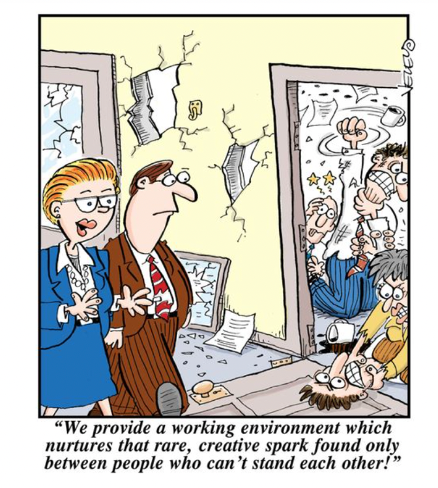
For any successful team, a shared sense of purpose is essential. When team members feel connected by a common goal, they tend to be more motivated, more supportive, and more resilient when challenges arise. Good leaders help build this mindset so that each person sees themselves as a valued contributor to the team’s mission. When you reinforce that shared purpose in practical ways, you can help turn a group of individuals into a cohesive team that works together more effectively. The following story illustrates how a team’s cohesiveness can make the difference in reaching its goals and working through obstacles together.
The Puzzle of Cohesiveness
Hooli, an ambitious tech company, landed a major contract to develop an advanced communication app for emergency responders. The project could transform their reputation. But as deadlines approached, conflicts began to fracture the project team and threaten the mission's success.
The team was made up of experts: Ava, a brilliant programmer; James, a meticulous designer; Carlos, an insightful data analyst; and Priya, a project manager skilled at strategy. Each brought real talent but approached work differently. Ava liked to jump straight into coding, while James wanted to start with design discussions. Carlos needed clear data before making decisions, and Priya believed in letting ideas evolve organically.
As they worked on the app, small disagreements snowballed. The team’s efforts began to feel like assembling a puzzle with pieces that didn’t fit. Ava grew frustrated by last-minute design changes. James felt his designs were undervalued. Carlos believed his insights were ignored. Tensions rose, and productivity dropped. Priya watched her team unravel. Without intervention, the entire project was at risk.
Recognizing the importance of unity, Priya called for a team meeting, but this time, the focus was different. She began by sharing an analogy about mountain climbing, likening each role to different tools needed for a successful ascent. A rope without hooks couldn’t help anyone scale a mountain, and a climber without an anchor would drift away. Each role was essential, but only if they were connected.
Then, she encouraged each member to share not only their frustrations but also their aspirations for the project. Ava revealed that she feared being left out of critical design decisions, which impacted her coding. James explained that his focus on design wasn’t about ego, but instead about ensuring the app felt intuitive in high-stress situations. Carlos, too, shared his desire for data-informed decisions to ensure functionality met real-world needs.

As they shared, Priya began to see how each person’s goals, while seemingly different, converged on the same purpose: creating a life-saving tool. She suggested they establish a daily stand-up to quickly align and resolve any misalignments, fostering an environment where each team member felt heard and valued. They also agreed on rotating “idea hosts” for meetings, letting each team member guide discussions to promote diverse insights and mutual respect.
The change was almost immediate. As the team started collaborating more openly and understanding each other’s perspectives, they worked with newfound energy and purpose. Ava’s code, now informed by James’s designs, was both functional and beautiful. Carlos’s data insights led to groundbreaking features, and Priya’s guidance ensured that every piece fit together seamlessly.
When Hooli finally presented the app, the client was astounded. The app was intuitive, efficient, and effective, exactly what the client needed. But more importantly, the team had grown into a cohesive unit, ready to tackle any challenge together.
Hooli succeeded because the team learned that strength comes from unity. They witnessed firsthand how, when talents are aligned with a common purpose, and everyone feels valued and heard, the impossible becomes achievable.
This story is a reminder that teams work best when people use their strengths together toward a clear goal. When that happens, the team can accomplish more than any one person on their own.
Questions:
- Reflecting on Priya’s leadership, what qualities made her intervention successful, and how can they be applied to your own leadership approach?
- What does this story teach about the importance of aligning personal goals with a shared team purpose?
“The nice thing about teamwork is that you always have others on your side.”

Here are some best practices to guide you in building cohesive teams:
Clarify Your Team’s Purpose and Goals
Make sure your team members understand and support the team’s mission, purpose, and objectives.
Steps You Can Take:
Clearly communicate the team’s goals and overall direction.
Involve team members in goal-setting when possible so they have input and a sense of ownership.
Regularly revisit goals to keep them in view and adjust as needed to stay relevant.
Make sure every member understands their role and how their contributions support the overall objectives.
Encourage Open Communication: Provide open, honest, and respectful communication channels where team members feel heard and information flows freely.
Steps You Can Take:
Set up regular check-ins and team meetings to encourage dialogue.
Promote active listening and respect for differing viewpoints.
Address communication issues directly and offer feedback on how the team is communicating.
Be mindful of different perspectives and invite a variety of voices into discussions to build a more inclusive team environment.
Build Trust and Mutual Respect: Create an environment where team members appreciate and value each other’s skills, experiences, and perspectives. This helps build a supportive and inclusive atmosphere.
Steps You Can Take:
Lead by example, treating all team members with respect and acknowledging their contributions.
Encourage team members to get to know one another on a personal level to build empathy and understanding.
Address disrespectful behavior when it occurs so it is clear it will not be ignored.
Establish norms for behavior and performance that everyone agrees to follow, such as meeting expectations, response times, and respectful disagreement.
Create a setting where team members feel comfortable sharing ideas, concerns, and feedback.
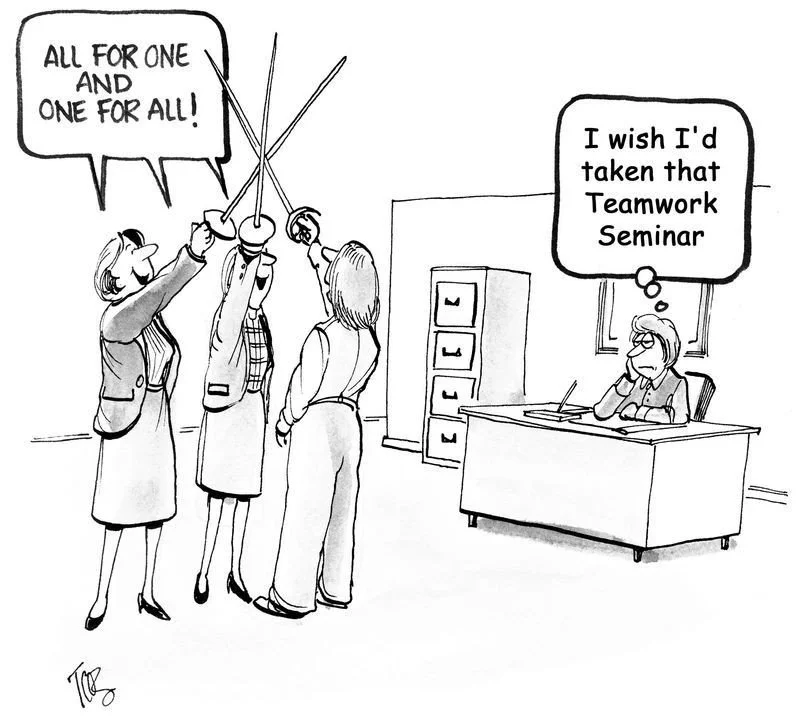
Take a moment to consider where your team stands right now. Are people communicating openly? Do they respect each other's contributions? Do they understand how their work connects to a larger purpose? Identify one area where you can make an immediate impact and take action this week. The strongest teams are built through consistent, intentional effort from leaders who prioritize cohesion.
Reflection Questions
What specific barriers currently prevent open communication within your team, and what is one concrete step you can take to address them?
Think about a time when your team achieved strong synergy. What conditions made that possible, and how can you recreate those conditions now?
Which of the three elements (open communication, mutual respect, or shared purpose) is weakest in your current team, and what will you do differently this week to strengthen it?

Elevate your understanding of Creating Cohesive Teams by taking flight with the following resources. Use this opportunity to navigate, uncover, and expand the horizons of your leadership influence.