Overcoming Ego for Growth
Ego gets in the way of humility more than almost anything else. When your ego takes control, you tend to become defensive and resist input that challenges your thinking. You avoid admitting gaps in your knowledge because it feels like exposing weakness. These reactions are understandable, but they still prevent you from growing as a leader.
Your ego functions as a protection mechanism. It shields you from discomfort, uncertainty, and the fear of being wrong in front of others. That's a normal human response. The problem comes when you let it drive your decisions and reactions without recognizing what's happening. Unchecked ego closes you off to learning and can damage the relationships you need to lead effectively.
Leaders who struggle to manage their ego often create workplaces where honest communication breaks down. People stop offering ideas because they've learned you won't really consider them. Teams become cautious and hold back information when they perceive you as unapproachable or defensive. Your ego signals that protecting your image takes priority over collaborative problem-solving, and people tend to respond accordingly.
Overcoming ego starts with distinguishing it from confidence. Confidence lets you make tough calls and stand behind your decisions. Humility lets you admit when you're wrong and adjust course. You need both. The difference often shows up in how you handle being challenged. Do you see it as a threat to your authority, or as a chance to consider something you might have missed? Humble leaders tend to choose the second option because they care more about getting it right than being right.

Self-Assessment:
Overcoming Ego for Growth
Please take a few moments to contemplate the following self-reflection questions. Where can you identify opportunities for personal growth in your leadership?
Do I find it difficult to admit when I am wrong or when I don't have all the answers?
When someone offers input, do I listen openly, or do I feel the need to justify my actions?
Do I ever dismiss ideas too quickly because they challenge my way of thinking?
How do I respond when someone points out an area where I could improve?
Do I see vulnerability as a strength in leadership, or do I associate it with weakness?
Have I ever avoided asking for help because I worried it would make me look less capable?
When faced with a challenge, do I focus on learning and growth, or do I become defensive?
How comfortable am I with receiving input from people in different roles, even if they have less experience than me?
Remember, this self-assessment is just a starting point for understanding your knowledge of Overcoming Ego for Growth as a leader. It's essential to reflect on your responses and actively work on areas where improvement is needed. Additionally, seeking feedback from others and working with your ECFL Leadership Coach can provide valuable insights into your strengths and weaknesses.

Ego is often the invisible barrier between where you are and where you want to be. It can keep you stuck in old patterns and make it difficult to admit when something isn't working. Leaders who struggle with ego often see challenges as threats rather than opportunities to grow. Instead of listening to different perspectives, they feel the need to defend their actions, justify decisions, or prove their expertise.
Ego-driven reactions are usually tied to fear. Fear of failure, fear of losing credibility, or fear of being seen as less capable can cause leaders to resist anything that challenges their sense of control. Research supports this connection. In 2024, J. A. Hubbart published an article in Administrative Sciences examining how fear-based leadership behaviors affect employee and organizational success. The research found that when leaders operate out of fear—whether it's fear of failure, losing control, or losing credibility—they tend to default to protective behaviors that can create anxiety and erode trust within their teams. The article also links fear-based leadership to lower psychological safety and suggests practical approaches to counter it, including clearer communication and creating systems that support learning rather than assigning blame.
“The greatest leaders are those who are willing to listen and learn, knowing that their ego is their greatest enemy.”
Servant leaders understand that growth requires some discomfort. By shifting from a mindset of protecting their ego to one of continuous learning, they're able to make better decisions, strengthen relationships, and build teams that trust them. Leaders who manage their ego create an environment where:
People feel comfortable sharing their ideas and perspectives
Input is viewed as an opportunity rather than a challenge to authority
Mistakes are used as learning experiences instead of sources of blame
Moving from an ego-driven mindset to a growth-focused one takes time. You need intentional effort and self-awareness to recognize when ego is influencing your behavior, and then you have to actively choose a different response. It's not something that changes all at once and you may not get it right every time.

Daily Ego Check-In
One way to stay mindful of your ego is to do a quick ego check-in at the end of each day or week. This simple practice helps you track patterns in your reactions and identify areas where you might need to shift your mindset.
Ask yourself:
Did I feel defensive at any point today? What triggered that reaction?
Was I more focused on proving I was right than on listening?
Did I dismiss an idea too quickly? What would have happened if I had explored it further?
Did I resist admitting a mistake or adjusting my approach?
Was there a moment where I chose curiosity over defensiveness? What was the result?
Journaling these answers or reflecting on them regularly helps leaders identify where ego is influencing their leadership. Recognizing these patterns is the first step toward managing them. Over time, small adjustments in mindset and behavior lead to better collaboration, stronger relationships, and more effective decision-making.
The scenarios below present situations where ego often surfaces in leadership. As you read through them, notice your honest reaction to each one. Which option feels more natural to you? There's no judgment here. Ego is a natural human response, and for some, the humble response may not come naturally at first. That's normal. The goal is to recognize where your ego might be driving your reactions so you can make more intentional choices about how you respond.
“The moment you become aware of the ego in you, it is strictly no longer the ego but just an old, conditioned mind patter. Ego implies unawareness. Awareness and ego cannot coexist.”
Scenario 1: Receiving Pushback on Your Decision
You've made a decision about how to handle a project timeline. During the team meeting, one of your direct reports questions your approach and suggests a different method. You feel your defenses go up.
Option A (Ego-Driven): You explain why your approach is better and point out the flaws in their suggestion. You make it clear that the decision has already been made and the team needs to move forward with your plan.
Option B (Humble): You pause and ask them to explain their thinking. Even if you ultimately stick with your original plan, you acknowledge their perspective and thank them for speaking up. You might say, "I hadn't considered that angle. Let me think about whether we can incorporate part of your idea."
Scenario 2: A Team Member Catches Your Mistake
You sent out an email with incorrect information about a client deadline. A junior team member notices and brings it to your attention privately.
Option A (Ego-Driven): You minimize the error and explain why it happened, perhaps pointing to how busy you've been or other factors that contributed to the mistake. You send a quiet correction without acknowledging the error publicly.
Option B (Humble): You thank them for catching it and send a follow-up email to the team acknowledging the mistake and providing the correct information. You don't over-apologize, but you model that errors happen and the important thing is correcting them quickly.

When someone challenges your thinking, your ego tells you that you need to justify your decisions or explain why you're right. Managing it begins with recognizing when pride or emotion is driving your reaction instead of clear thinking, and then choosing to respond differently. The practices below help you identify when ego is taking over so you can make more intentional choices.
Recognize Ego and Replace Defensiveness with Curiosity: Ego often shows up as defensiveness when receiving input or facing challenges. The first step is recognizing when this happens and pausing before reacting. Instead of feeling the need to protect your position, shift to a mindset of curiosity.
Ask yourself, What might they be seeing that I am missing?
Instead of pushing back, ask, Can you give me an example?
Separate Feedback from Your Identity: Feedback is about your actions or behavior, not your value as a person or leader. It’s easy to take feedback personally, but this mindset can block your ability to learn and grow.
When you receive input, remind yourself, “This feedback is here to help me grow, not to diminish me.”
Focus on the specific behaviors being discussed, and think about how adjusting them could improve your outcomes.
Reframe Vulnerability as Strength: Admitting areas for improvement does not make you weak—it shows confidence and self-awareness. Leaders who are willing to acknowledge growth areas build trust and encourage their teams to do the same.
Start by sharing a development goal with a trusted colleague and asking for their input.
Acknowledge when you do not have all the answers and invite collaboration.
Pause and Reflect to Gain Clarity: Ego can make leaders react impulsively when they feel challenged. Instead of immediately responding, practice pausing. A short moment of reflection can prevent a defensive reaction and help you respond thoughtfully.
If you feel yourself reacting emotionally, take a deep breath and count to five before speaking.
Ask yourself, What is the most productive way to respond?
Surround Yourself with Honest Feedback Partners: Build relationships with people who will provide honest, constructive feedback rather than sugarcoating their input. These trusted partners can help you identify blind spots and hold you accountable for your growth.
Ask trusted colleagues, What is one thing I could do better as a leader?
Be intentional about seeking feedback from those who have different perspectives.
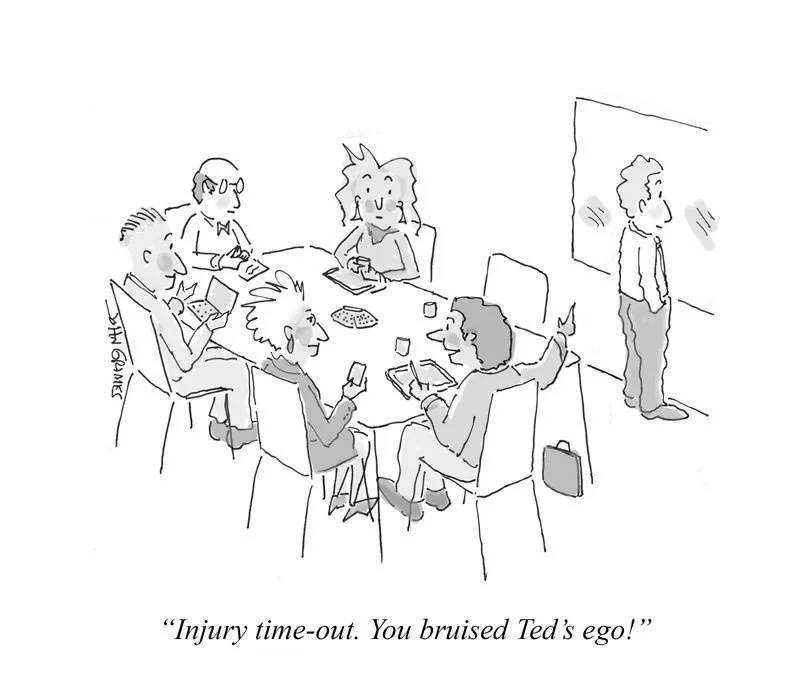
Overcoming ego doesn't happen all at once, and you'll likely have some moments where defensiveness wins. However, you’ll also have moments where you catch yourself in time to choose differently. What matters is building awareness of when your ego is running the show and developing the ability to set it aside more often. Each time you choose humility over pride, you strengthen that muscle. Over time, those choices add up to become the kind of leader people trust and want to follow.
Reflection Questions
What are the signs that ego is influencing how you receive feedback?
How can you reframe vulnerability to see it as a strength rather than a weakness?
What strategies can you use to pause ego-driven reactions during feedback conversations.

Elevate your understanding of Overcoming Ego for Growth by taking flight with the following resources. Use this opportunity to navigate, uncover, and expand the horizons of your leadership influence.
Brené Brown - Embracing Vulnerability (5:55)
A Blessing And A Curse: How Can Leaders Manage Their Egos?
The Ego-Trap: How Coaching Helps Leaders Manage and Overcome Ego-Driven Behaviors
Understanding and Mitigating Leadership Fear-Based Behaviors on Employee and Organizational Success (2024, J. A. Hubbart)