Psychological Safety
Psychological safety is often discussed in professional settings, but the need for it is human. The concept centers on whether people feel safe enough to speak honestly and be themselves. Someone may have a useful concern or a creative idea, but they’re likely to hold back if they feel uncomfortable.
Creativity often requires small social risks because it asks people to share ideas, questions, or concerns that may not land perfectly or could invite criticism. Speaking up can sometimes challenge the status quo, especially when we need to present ideas that are not fully formed or admit we don’t have all the answers. When the people we lead trust that their honesty and vulnerability will be met with respect, they’re more likely to contribute their best ideas. Psychological safety helps make the kind of risk-taking needed for creativity possible.
Self-Assessment:
Psychological Safety
Please take a few moments to contemplate the following self-reflection questions. Where can you identify opportunities for personal growth in your leadership?
Do people feel safe speaking up, even when their ideas challenge you or the status quo? When was the last time someone disagreed with me?
Do people feel safe acknowledging errors early, or do they hide them?
Have I made it clear that it’s okay not to have all the answers, and do I model that myself?
Do I regularly invite input from all voices, including those who are quieter or less confident? Who do I hear from the most, and who do I rarely hear from?
Do I ask for feedback on my leadership, and if so, what do I do with that feedback?
Do I recognize and reward behaviors that reflect vulnerability, curiosity, and thoughtful risk-taking?
Do I help keep disagreement focused on the issue rather than the person?
Would people say they can be honest and be themselves without fear of judgment or retaliation?
Remember, this self-assessment is just a starting point for understanding your knowledge of Psychological Safety as a leader. It's essential to reflect on your responses and actively work on areas where improvement is needed. Additionally, seeking feedback from others and working with your ECFL Leadership Coach can provide valuable insights into your strengths and weaknesses.


Psychological safety creates enough trust for people to be honest without feeling like one idea, question, or concern will hurt their credibility. People need to believe their perspectives will be received with respect, especially when a conversation involves uncertainty or a different point of view.
Many people hold back because they’re trying to protect their role and image. Before speaking up, they may wonder:
“People might think I don’t understand the issue.”
“My idea may sound unrealistic if I’m unable to explain it clearly.”
“Someone may see me as difficult if I question this process.”
“I may look unprepared if I admit I don’t know and don’t have the answer.”
“People may think I’m criticizing their decision if I suggest another approach.”
“I may make things awkward if I say what others are avoiding.”
Unfortunately, we can generate good ideas and still second-guess whether those ideas are worth sharing. A helpful thought can turn into a story about judgment, rejection, or embarrassment before we say it out loud. Cognitive reframing helps interrupt that pattern by asking us to look at those thoughts from a more balanced perspective. The examples below show how a fear about speaking up can be reframed into a more useful way of thinking:
Asking a question may help more than one person understand the issue.
Sharing a rough idea can give others something useful to build on.
Questioning a process can help people decide whether the current approach still fits.
Admitting uncertainty can make the conversation more honest.
Suggesting another approach can help people compare options more carefully.
Naming what others are avoiding can give the group a clearer starting point.
“Psychological safety does not mean that you feel comfortable all the time. Psychological safety means you feel comfortable talking about what makes you uncomfortable.”
When leaders work to create psychological safety, employees don’t have to spend as much energy worrying about how they’ll be perceived. That gives them more freedom to think creatively and contribute to innovation.
But how do we do this?
First, authenticity matters. Psychological safety depends on real connection, so there is a real need for genuineness and transparency. Some leaders may need to consciously develop the capacity to be caring, curious, and positive, all qualities that are difficult to access when operating from a place of fear or self-protection. There is often a strong temptation to dive straight into business without acknowledging what others might be carrying. A more effective approach is to pause, take a breath, and intentionally focus on what others may be experiencing.
Leaders can model psychological safety through their own behavior. Here’s what that kind of leader looks like in action:
They Listen More Than They Talk: They don’t just nod along; they’re fully present. They ask, “What do you think?” and make it clear every voice matters.
They Admit When They Don’t Know: Instead of pretending to have all the answers, they say things like, “I’m not sure… what do you all think?” This shows that it’s okay to be human and still be a strong leader.
They Respond, Not React: Even when mistakes happen or tensions run high, they stay calm and curious. “Let’s talk through this” replaces blame or frustration.
They Appreciate Ideas, Even the Unpolished Ones: They don’t expect perfection. They know that a rough idea can spark something brilliant, so they say things like, “That’s interesting, let’s explore it.”
They Normalize Feedback: They give feedback in a helpful, respectful way, and they invite it in return. “How can I improve?” is a regular question they ask their team.
They Celebrate Learning from Failure: If something doesn’t work out, they don’t shame anyone. Instead, they ask, “What did we learn?” and treat failure as part of the process, not a personal flaw.
They Shine the Spotlight on Others: They share credit, recognize effort, and make sure team members feel seen and valued.
This Aesop’s fable, The North Wind and the Sun, explores how people respond to pressure versus support. While it is not typically presented as a lesson in psychological safety, it reflects a key idea: people are more likely to open up when they feel safe. As you read, consider how this applies to your leadership approach. (Click here if you’d like to read the interactive version.)

The North Wind and the Sun
The North Wind and the Sun had a quarrel about which of them was the stronger. While they were disputing with much heat and bluster, a Traveler passed along the road wrapped in a cloak.
“Let us agree,” said the Sun, “that he is the stronger who can strip that Traveler of his cloak.”
“Very well,” growled the North Wind, and at once sent a cold, howling blast against the Traveler.
With the first gust of wind the ends of the cloak whipped about the Traveler’s body. But he immediately wrapped it closely around him, and the harder the Wind blew, the tighter he held it to him. The North Wind tore angrily at the cloak, but all his efforts were in vain.
Then the Sun began to shine. At first his beams were gentle, and in the pleasant warmth after the bitter cold of the North Wind, the Traveler unfastened his cloak and let it hang loosely from his shoulders. The Sun’s rays grew warmer and warmer. The man took off his cap and mopped his brow. At last he became so heated that he pulled off his cloak, and, to escape the blazing sunshine, threw himself down in the welcome shade of a tree by the roadside.
Gentleness and kind persuasion win where force and bluster fail.
How does this fable connect to psychological safety?
Where might your leadership require directness, and where might it require more warmth, patience, and support?
“We know that vulnerability is the cornerstone of courage-building, but we often fail to realize that without vulnerability, there is no creativity or innovation. Why? Because there is nothing more uncertain than the creative process, and there is absolutely no innovation without failure.”

Amy Edmondson, author of The Fearless Organization, describes psychological safety as “felt permission for candor.” This kind of environment allows people to speak honestly, ask questions, raise concerns, and admit mistakes without fear. The following practices help leaders create that kind of environment in their organizations:
Model Vulnerability: Psychological safety often begins with the leader’s willingness to be open. Acknowledging when you do not have the full picture, sharing your own learning moments, or inviting a different perspective signals that certainty is not a requirement for credibility. When leaders demonstrate that they are still learning, others feel more comfortable admitting the same.
Respond with Curiosity: Moments of stress will reveal an organization’s culture more clearly than planned meetings ever will. When someone surfaces a concern or challenges a direction, how you initially respond is important. Offering a measured, thoughtful reply communicates that honesty is valued. Conversely, a rushed or dismissive reaction teaches people to filter themselves. The goal is not to agree with every viewpoint, but to create space where viewpoints can be voiced.
Make It Easy to Raise Concerns: Many teams develop the habit of waiting until they are certain before speaking up. That hesitation often comes from past experiences where vulnerability felt costly. Leaders can influence this behavior by how they handle errors. When conversations about mistakes focus on understanding and learning, rather than blame, people are more likely to raise issues while they are still manageable.
Create Room for More Voices: Every team has voices that naturally fill the room and others that remain quieter. Psychological safety is reflected in whether a range of perspectives is present in the discussion. Paying attention to who contributes regularly and who does not can reveal patterns that need attention. Inviting input directly and creating space for reflection allows more people to participate.
Keep Conversations Focused on the Work: Disagreement is part of thoughtful collaboration, but it’s the way those disagreements are framed that matters. When the discussion stays centered on the work itself, disagreement becomes easier to navigate. Leaders who guide conversations back to the issue, rather than the person, help create an environment where honesty feels constructive rather than personal.
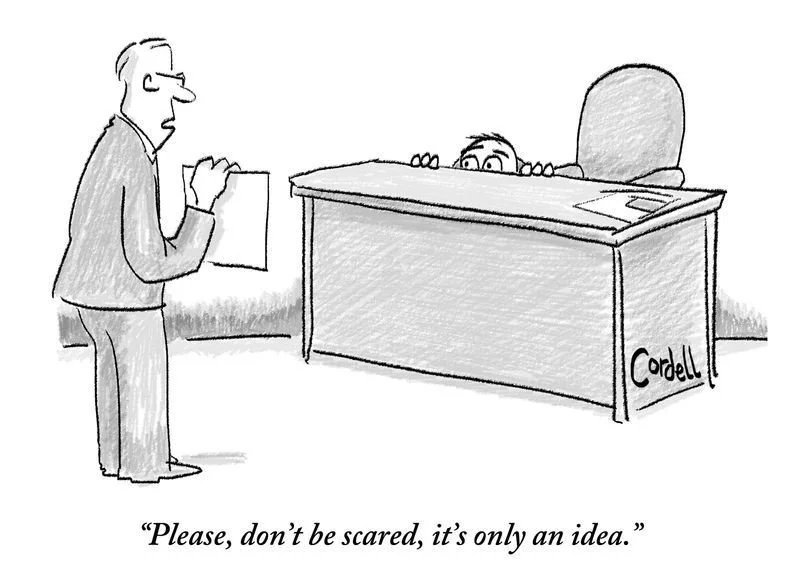
Psychological safety gives people room to take the kinds of risks innovation requires. When team members can challenge the status quo, offer imperfect ideas, raise concerns, and learn from failure without fear, they are more likely to contribute to the thinking that helps organizations evolve and innovate.
Reflection Questions
What behaviors suggest that trust is strong on my team? Where do I see signs that people may be withholding or cautious?
How comfortable do team members seem in bringing their full selves to work? What have I done to support or discourage that?

Elevate your understanding of Psychological Safety by taking flight with the following resources. Use this opportunity to navigate, uncover, and expand the horizons of your leadership influence.
What is Psychological Safety? | McKinsey
The Four Stages of Psychological Safety
Building a Psychologically Safe Workplace | Amy Edmondson (11:26)