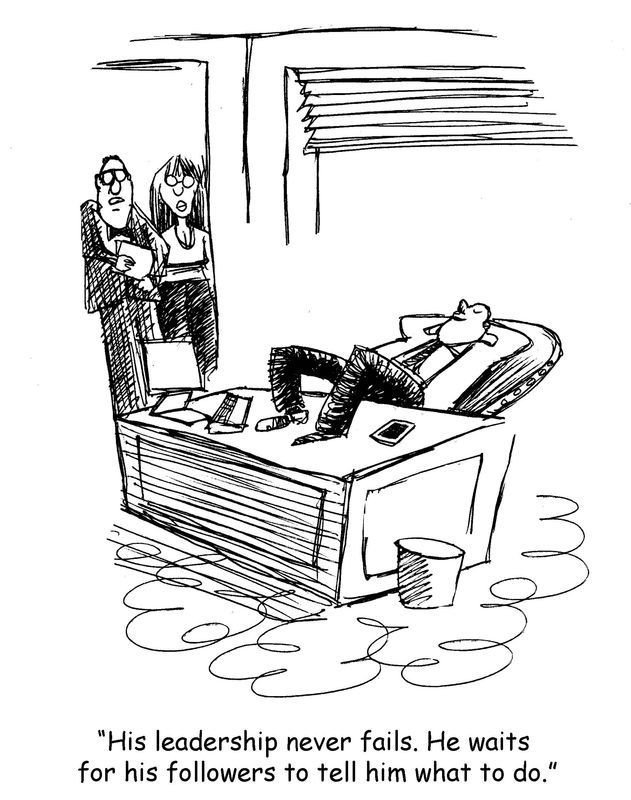
Servant Leadership
Larry’s Leadership Launch

Trying to offer a solution before you fully understand the problem is a recipe for failure. When we make assumptions before we have spent the time to learn about an issue, it often leads to making empty and incorrect comments. Everyone has an opinion and has the freedom, in our country, to share their thoughts. However, when we slow down to consider more than what’s at the surface of a situation, we are able to offer a much more informed solution.
More important than offering our thoughts is demonstrating our actions. Paraphrasing Ralph Waldo Emerson’s words: Many times, what we do speaks so loudly that no one can hear what we are saying. Our leadership is empty if our behavior does not match our words. Servant leadership means leading by serving others. Serving is a verb that indicates action.
A wise leader and friend of mine recently sent me the following quote:
“The world is changed by your example, not by your opinion.” - Mother Teresa
Take the time to process and apply this wisdom, and you will make a difference!
Larry Little
Eagle Center for Leadership
At North Wind, Servant Leadership is about redefining what it means to hold authority. Traditional leadership often centers on decision-making power and control. Servant Leadership reverses that model by using position and authority to support and develop people, prioritizing their team's growth and well-being over personal recognition or status.
This approach requires leaders to revise their methods. Instead of asking, "What do I need from my team?" servant leaders ask, "What does my team need from me?" The answer might be removing obstacles, providing guidance, advocating for resources, or creating space for people to take ownership of their work. They make decisions that help others perform at their best.
“Servant leadership is all about making the goals clear, and then rolling your sleeves up and doing whatever it takes to help people win. ”
Servant Leadership matters because strong teams are built on trust and investment. When people feel genuinely supported in their roles, they're more engaged, more willing to take initiative, and more likely to stay. Every interaction a leader has—whether it's a one-on-one conversation, a team meeting, or a decision about resources—shapes how people experience their work. Servant Leadership creates an environment where people can grow, contribute meaningfully, and see their success as connected to North Wind's success.
This principle extends beyond the workplace. How you show up for family, friends, and colleagues reflects the same approach: your choices affect other people, and you can choose to make that impact meaningful.
The Origins of Servant Leadership
The term "servant leadership" comes from Robert K. Greenleaf, who introduced it in a 1970 essay called The Servant as Leader. Greenleaf spent most of his career at AT&T working in management research and development. After he retired, he began consulting with universities, nonprofits, and businesses. During the 1960s, he noticed young people rebelling against major institutions and concluded the problem wasn't with the people but with the institutions themselves. They weren't serving well, which meant they weren't leading well either.
Greenleaf argued that true leaders are chosen by their followers, not appointed by titles. He wrote about the skills that matter for servant leadership: awareness, foresight, and the ability to listen. The concept itself came from something Greenleaf read. He explained it this way:
"The idea of The Servant as Leader came out of reading Hermann Hesse's Journey to the East. In this story we see a band of men on a mythical journey, probably also Hesse's own journey. The central figure of the story is Leo who accompanies the party as the servant who does their menial chores, but who also sustains them with his spirit and his song. He is a person of extraordinary presence. All goes well until Leo disappears. Then the group falls into disarray and the journey is abandoned. They cannot make it without the servant Leo. The narrator, one of the party, after some years of wandering finds Leo and is taken into the Order that had sponsored the journey. There he discovers that Leo, whom he had known first as servant, was in fact the titular head of the Order, its guiding spirit, a great and noble leader… to me, this story clearly says that the great leader is seen as servant first, and that simple fact is the key to his greatness. Leo was actually the leader all of the time, but he was servant first because that was what he was, deep down inside."
If you’re interested, you can read his entire essay here: The Servant as Leader
As the fifth pillar of the North Wind Way, Servant Leadership is supported by three values: Humility, Emotional Intelligence, and Diversity.
Humility allows you to set ego aside and focus on what your team actually needs rather than protecting your own image or being right.
Emotional Intelligence helps you read situations accurately, understand what's unsaid, and respond to people as individuals rather than assumptions.
Diversity brings different perspectives and ways of thinking into your decision-making, which leads to stronger solutions and more innovation.
These values build on each other, as growth in one area strengthens the others. This pillar begins with Humility, so let's get started.