
Overcoming Ego for Growth
Our egos can become a barrier to resilience. Ego functions as a protection mechanism, shielding us from discomfort and the possibility of failure. It's a normal human response, but the problem comes when we let it drive our decisions unchecked. This instinct to protect ourselves can limit our ability to learn and harm the relationships needed to lead effectively.
Leaders who struggle to manage their ego signal that protecting their image takes priority over collaborative problem-solving, and people tend to respond accordingly. Learning to set our ego aside, especially when our judgment is challenged, plays an important part in our ability to persevere.

Self-Assessment: Overcoming Ego for Growth
Please take a few moments to reflect on the following questions. Where can you identify opportunities for growth in your leadership?
Do I find it difficult to admit when I am wrong?
When someone offers input, do I listen openly, or do I feel the need to justify my actions?
When someone challenges my approach, am I willing to consider that another option may work better?
Can I recognize when my ego is influencing how I respond to feedback?
Am I comfortable admitting when I need help or don't know the answer?
When I make a mistake, can I acknowledge it without immediately explaining or defending why it happened?
When something isn't working, am I willing to adjust my approach without taking it personally?
How comfortable am I with receiving input from people in different roles, even if they have less experience than me?
This self-assessment is a starting point for understanding Overcoming Ego for Growth as a leader. Reflect on your responses, identify areas for growth, and use feedback from others and your ECFL Leadership Coach to guide your development.


Ego often stands in the way of the growth leadership requires, keeping you stuck in old patterns and making it difficult to admit when something isn't working. When ego takes hold, you're more likely to see challenges as threats rather than opportunities to grow. Instead of listening to different perspectives, you feel the need to defend your actions, justify your decisions, or prove your expertise.
Ego-driven reactions are often tied to fear: fear of failure, fear of losing credibility, or fear of being seen as less capable. Research supports this connection. In 2024, J. A. Hubbart published an article in Administrative Sciences examining how fear-based leadership behaviors affect employee and organizational success. The research found that when leaders operate out of fear, they tend to default to protective behaviors that can create anxiety and erode trust within their teams. The article also connects fear-based leadership with lower psychological safety and behaviors that can interfere with teamwork.
Leaders who manage their ego and persevere through discomfort are better able to make sound decisions and build trust, creating an environment where:
People feel comfortable sharing their ideas and perspectives.
Input is viewed as an opportunity rather than a challenge to authority.
Mistakes are used as learning experiences instead of sources of blame.
Adjustments to approach are welcomed when new information calls for them.
Managing your ego takes intentional effort and self-awareness. You have to recognize when ego is influencing your behavior and choose a different response. You won't get it right every time, and that's part of the process.
“The greatest leaders are those who are willing to listen and learn, knowing that their ego is their greatest enemy.”
Daily Ego Check-In
One way to stay mindful of your ego is to do a quick ego check-in at the end of each day or week. This simple practice helps you track patterns in your reactions and identify areas where you might need to adjust your mindset.
Ask yourself:
Did I feel defensive at any point today? What triggered that reaction?
Was I more focused on proving I was right than on listening?
Did I dismiss an idea too quickly? What would have happened if I had explored it further?
Did I resist admitting a mistake or adjusting my approach?
Was there a moment when I chose curiosity over defensiveness? What was the result?
Journaling and reflecting on these questions regularly can help you identify where ego may be interfering with growth. The clearer these patterns become, the easier it is to choose a different response.


Ego is a human response, and for some, challenging it may not come naturally at first. The goal is to recognize where your ego might be driving your reactions so you can make a more intentional choice about how you respond.
The scenarios below present situations where ego often surfaces in leadership. As you read through them, notice your honest reaction to each. Which option are you more likely to choose?
Scenario 1: Receiving Pushback on Your Decision
You've made a decision about how to handle a project timeline. During the team meeting, one of your direct reports questions your approach and suggests a different method. You feel your defenses go up.
Option A (Ego-Driven): You explain why your approach is better and point out the flaws in their suggestion. You make it clear that the decision has already been made and the team needs to move forward with your plan.
Option B (Growth-Focused): You pause and ask them to explain their thinking. Even if you ultimately stick with your original plan, you acknowledge their perspective and thank them for speaking up. You might say, "I hadn’t considered that angle. Let me take another look before we move forward."
Scenario 2: A Team Member Catches Your Mistake
You sent out an email with incorrect information about a client deadline. A junior team member notices and brings it to your attention privately.
Option A (Ego-Driven): You minimize the error and explain why it happened, perhaps pointing to how busy you've been or other factors that contributed to the mistake. You send a quiet correction without acknowledging the error publicly.
Option B (Growth-Focused): You thank them for catching it and send a follow-up email to the team addressing the mistake and providing the correct information. You focus on correcting the error rather than worrying about how the mistake makes you look.
“The moment you become aware of the ego in you, it is strictly speaking no longer the ego, but just an old, conditioned mind-pattern. Ego implies unawareness. Awareness and ego cannot coexist.”

The best practices below help you recognize when pride or emotion is driving your reaction, so you can choose a better response:
Best Practices for Overcoming Ego for Growth:
Recognize Ego and Replace Defensiveness with Curiosity: Ego often shows up as defensiveness when receiving input or facing challenges. Instead of feeling the need to protect your position, respond with curiosity.
Ask yourself, What might they be seeing that I am missing?
Instead of pushing back, ask, Can you give me an example?
Separate Feedback from Your Identity: Feedback is about your actions or behavior, not your value as a person or leader. It's easy to take feedback personally, but it can hinder your ability to lead well.
When you receive input, remind yourself, “This feedback is here to help me grow, not to diminish me.”
Focus on the specific behaviors being discussed, and think about how adjusting them could improve your outcomes.
Reframe Vulnerability as Strength: Admitting areas for improvement doesn't make you weak. It shows confidence and self-awareness. Leaders who acknowledge their own growth areas build trust and make it easier for others to do the same.
Start by sharing a development goal with a trusted colleague and asking for their input.
Acknowledge when you do not have all the answers and invite collaboration.
Pause and Reflect to Gain Clarity: Ego can make leaders react impulsively when they feel challenged. Practice pausing before you answer. Even a few seconds can create enough space to think more clearly.
If you feel yourself reacting emotionally, take a deep breath and count to five before speaking.
Ask yourself, What is the most productive way to respond?
Surround Yourself with Honest Feedback Partners: Build relationships with people who will provide honest, constructive feedback rather than sugarcoating their input. These trusted partners can help you identify blind spots and hold you accountable for your growth.
Ask trusted colleagues, What is one thing I could do better as a leader?
Be intentional about seeking feedback from those who have different perspectives.
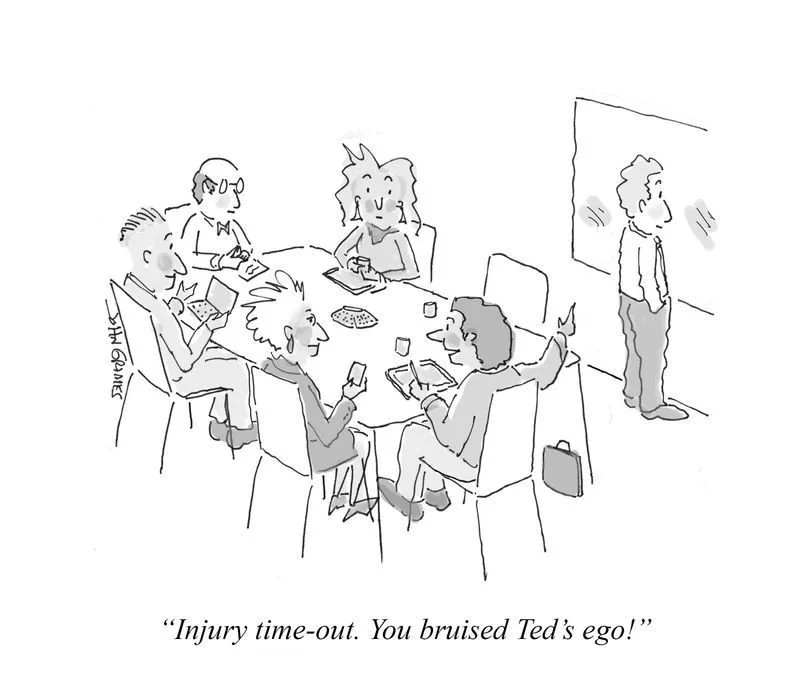
Overcoming ego doesn't happen all at once, and there will be moments when defensiveness wins. However, you’ll also have moments where you catch yourself in time to choose differently. The more often we catch ego influencing our response, the more opportunity we have to set it aside. Each time you choose perseverance over pride, you strengthen your resilience. Over time, these choices help us become leaders people trust and want to follow.

Strengthen your understanding of Overcoming Ego for Growth by sticking with the following resources. Use this opportunity to note new insights and adhere to practices that will enhance your leadership journey.
A Blessing And A Curse: How Can Leaders Manage Their Egos?
The Ego-Trap: How Coaching Helps Leaders Manage and Overcome Ego-Driven Behaviors
Understanding and Mitigating Leadership Fear-Based Behaviors on Employee and Organizational Success (2024, J. A. Hubbart)
