
Staying Grounded Under Pressure
Pressure has a way of testing how we show up, especially when other people are depending on us. The first thing it takes from us is our attention, which is exactly what the people we lead need most when we have the least of it to give.
When we think about pressure, we often think about something uncomfortable that we'd rather avoid. But to Billie Jean King, one of the most respected names in tennis, it meant something else. "Pressure is a privilege, and champions adjust," she told a player who was dreading a match. Champions adjust because they notice they need to.
Staying grounded under pressure has less to do with how calm you feel than with what you do about it. It means you know how to recognize the pressure and slow yourself down enough to respond with intention. How you show up in these moments is self-leadership, and it's the first step toward being visible to the people who need you.

Self-Assessment: Staying Grounded Under Pressure
Please take a few moments to reflect on the following questions. Where can you identify opportunities for growth in your leadership?
Do I recognize when pressure is helping me focus rather than getting in my way?
Do I know what helps me stay grounded when I'm under pressure?
Can I recognize the physical or emotional signs that tell me I'm feeling stressed?
Am I aware of my usual response when pressure starts to affect me?
Do I give myself enough space to respond instead of reacting automatically?
Do I notice how much of me is taken up with managing myself when the pressure is on?
Can I tell when I'm really visible to someone and when I'm only available to them?
After the pressure passes, do I go back and look at what set me off and what helped me calm myself?
This self-assessment is a starting point for understanding Staying Grounded Under Pressure as a leader. Reflect on your responses, identify areas for growth, and use feedback from others and your ECFL Leadership Coach to guide your development.

Unfortunately, and cliché as it sounds, stress is part of life. At home, at work, or anywhere responsibility shows up, you're going to feel pressure. The more important question is how you choose to respond.
To stay grounded when things feel overwhelming, it helps to understand what's happening beneath the surface. Pressure comes from the outside; it's the deadline, the expectation, the challenge in front of you. Stress is your internal response; it's how your body and mind react when things feel uncertain or urgent. Neither one is always harmful. Pressure can sharpen your focus, and stress can be useful if you know how to manage it.
What stress costs you is attention. Some of it builds slowly across a whole day and some of it arrives all at once, but either way, managing your own response takes the same attention you were about to spend on the person waiting for an answer from you.
You may not always know when pressure is coming, but your body usually does. It might show up in your posture, your breath, or the way you rush through a conversation. Paying attention to these early signals gives you a better chance to respond with clarity and control.
“The main thing is to keep the main thing the main thing.”
Picture this scenario: someone gives you feedback right before a meeting that you weren't expecting. Your shoulders tighten. Your mind starts to race. In that moment, you have a choice. You can react, or you can pause. You might say, "Thanks for letting me know. Let's talk more after the meeting," or "Let me get back to you on that after I've had some time to think." This small shift gives you a moment to collect yourself so you can respond once your body has returned to a calmer state. Skip it, and you'll still walk into the meeting on time, but your attention will be back in the hallway with the feedback.
Practice this pause often enough, and it protects your ability to give the people in front of you your full attention, which is where trust actually comes from.
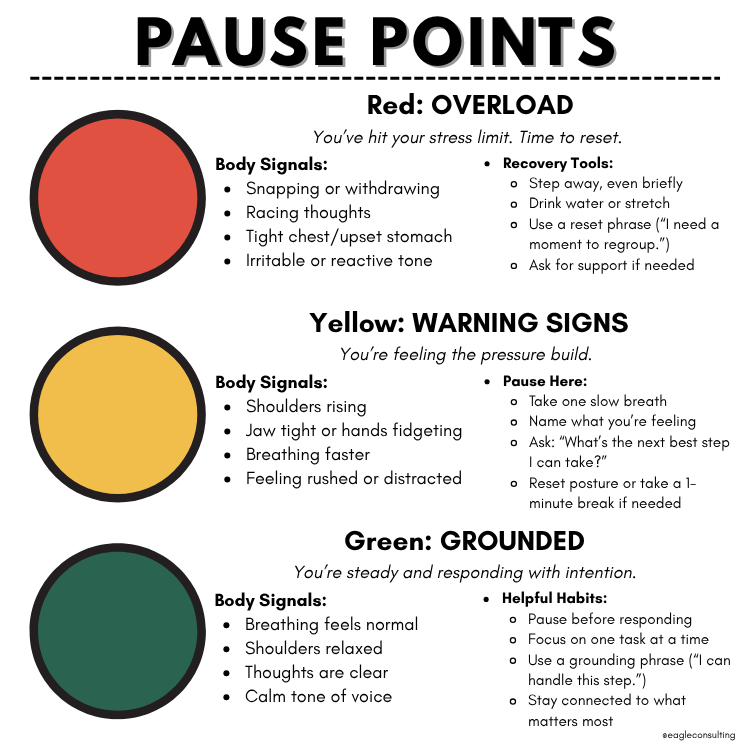
Here's a visual guide to help you recognize what pressure and stress might feel like, and what to do when they show up.

Everything so far has been about ordinary pressure, the kind that shows up on a Tuesday and passes by Thursday. Crisis costs you attention the same way, only faster and with more people waiting on it.
The hardest version is the one where you're the person most affected. The news reaches you first, or the decision came from above you, and you don't agree with it. You're expected to lead people through something you haven't worked through yourself, and the pressure isn't happening around you; it's happening to you.
If you're on a plane that's going down, you're told to secure your own mask before you help anyone else, even though everything in you argues against it. A leader who skips their own grounding doesn't become more available to their team; they become less useful to it, and the problem often doesn't show until someone needs something you no longer have to give.
“Anxiety is a response, grounding is a choice.”
What people need from you in a crisis is usually less than you think and more specific. They aren't looking for answers you don't have, and they can generally tell when you're offering reassurance in place of information. What they want to know is what's actually happening, what's already been decided, and where they can go when something changes. All of that takes attention to deliver, which is why the grounding comes first.
Once you've done that much for yourself, here's what visibility looks like when the stakes are high:
Ask more than you tell. When your attention is running low, giving information takes less out of you than taking it in, so you start talking. Asking people what they're seeing costs you more and gives you more back.
Listen for what isn't being said. People hold back the things they think you can't handle at the moment, which means what you aren't hearing is usually what you most need to know.
Say when you don't know. Certainty you don't have can be expensive to maintain, and holding it up takes the attention you need from the people in the room.


Pressure can feel uncomfortable, but it often means you're in a place of trust. When others rely on you, they're entrusting you with something important, and your body may tell you differently in the moment. Champions adjust, and adjusting starts with noticing that something needs to be adjusted.
Here are some best practices to help you stay grounded when stress starts to affect how you respond:
Know Your Early Signals: Pay attention to the physical, emotional, or behavioral signs that tell you pressure is affecting you. The earlier you notice the shift, the more choice you have in how you respond.
Pause Before You React: Give yourself enough space to interrupt an automatic response. Even a brief pause can help you think before frustration, defensiveness, or urgency takes over.
Step Back, But Don't Disappear: Sometimes you need a little distance to regain perspective. If you do step away, communicate what you're doing and return to the situation rather than becoming unavailable when others still need leadership.
Notice Where Your Attention Is: Under pressure, most of your attention goes to managing yourself, which leaves less of it for the person in front of you. Catching this is what lets you get some of it back before it costs someone a conversation they needed.
Use a Grounding Strategy That Works for You: Find a few simple ways to reset in the moment, such as slowing your breathing or using a brief phrase that helps you refocus.
Learn From the Moment: After the pressure passes, look back at what triggered your response, what helped, and what you want to handle differently next time. You won't always respond perfectly, but you can learn from each experience.
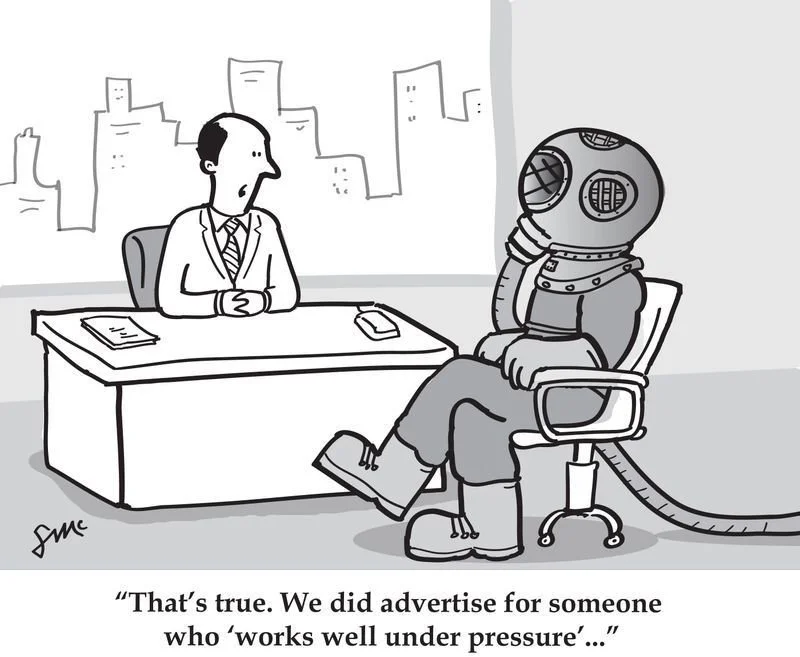
The people you lead can tell the difference between having your time and having your attention. Try this today. Pick one moment when you can feel the pressure building, and before you do anything else, ask yourself where your attention is. Don't ask what you should say or how you look, just whether you're actually with the person in front of you or somewhere back down the hall. You don't have to fix anything. Noticing is the whole exercise, and it's the part everything else depends on.

Strengthen your understanding of Staying Grounded Under Pressure by sticking with the following resources. Use this opportunity to note new insights and adhere to practices that will enhance your leadership journey.
Leading with Grounded Confidence
Leadership Under Pressure: 3 Strategies for Keeping Calm During a Crisis
