Strategic Courage
Life is full of crossroads, decisions that force us to choose between staying in our comfort zones or taking a step into the unknown. In leadership, those decisions often involve risk, and progress often depends on how well we handle it.
Strategic courage is the ability to take calculated risks with sound judgment and clear purpose. Courage already asks us to move beyond what feels comfortable, and strategic courage helps us do that with more intention and the confidence to stand behind what we decide.
Self-Assessment:
Strategic Courage
Please take a few moments to contemplate the following self-reflection questions. Where can you identify opportunities for personal growth in your leadership?
Do I view risk as an opportunity for growth?
Am I comfortable stepping outside of my comfort zone to pursue new opportunities?
Do I recognize that avoiding all risks can sometimes create more problems?
Do I approach uncertainty with confidence?
Before taking a risk, do I thoroughly evaluate the potential benefits and possible costs?
Am I willing to make tough decisions even when they are unpopular?
Can I handle setbacks and failures without losing confidence?
Do I take responsibility for my choices, even when outcomes do not go as planned?
Remember, this self-assessment is just a starting point for understanding your knowledge of Strategic Courage as a leader. It's essential to reflect on your responses and actively work on areas where improvement is needed. Additionally, seeking feedback from others and working with your ECFL Leadership Coach can provide valuable insights into your strengths and weaknesses.


Risk is an inevitable part of growth, success, and innovation. Some risks move us forward, while others create setbacks that could have been avoided. Strategic courage is what helps us tell the difference. It asks us to look at risk with care and use sound judgment to make decisions that fit the moment, instead of reacting out of pressure or fear.
“Risks must be taken because the greatest hazard in life is to risk nothing.”
There are three primary types of risk-takers:
1. The Calculated Risk-Taker: The Strategic Player
Calculated risk-takers are willing to act, but they want to understand the situation first. They think through what could happen, look for possible challenges, and build a plan before moving forward. They are open to stepping outside their comfort zone, but they want to know what they are stepping into.
Strengths:
Conduct thorough research before making decisions
Build contingency plans that help them adjust when conditions change
Potential Pitfalls:
May overanalyze and miss opportunities
Can struggle with quick decisions when speed is needed
2. The Fearless Risk-Taker: The Bold Visionary
Fearless risk-takers trust their instincts and move quickly, even when they do not have every answer. They often see opportunity before others do, and that confidence can create momentum when a situation calls for bold action. Their willingness to move can lead to meaningful progress, especially when hesitation is slowing everyone else down.
Strengths:
Bring strong confidence to their decisions
Move quickly when action is needed
Potential Pitfalls:
May take on too much risk without thinking through the consequences
Can miss feedback that would strengthen the decision
3. The Reckless Risk-Taker: The Gambler
Reckless risk-takers act without enough evaluation. Their decisions are often driven by emotion, urgency, or outside pressure rather than strategy. The action may look bold on the surface, but without a clear plan or good judgment behind it, the cost of failure is higher than it ha to be.
Strengths:
Willing to move without delay
Sometimes notices opportunities others overlook
Potential Pitfalls:
Often acts on impulse instead of strategy
Can create unnecessary damage because the risk was poorly chosen

The purpose of these categories is to help us recognize our default approach to risk more clearly. Once we can see that pattern, we can refine it and make better decisions when it matters most. Strategic courage brings confidence and preparation together, so we can move forward with more intention.
Risk will always be part of leadership, which is why the real question is how we respond to it. Some moments call for patience, and others call for action. Successful leaders own the outcome and study what it taught them, so they can use that understanding to make a better decision the next time.
When you overanalyze, practice moving with more confidence.
When you move too quickly, slow down and gather what you still need.
When you act on impulse, pause long enough to think through the decision.
Recognizing your default pattern is what gives you the chance to react with more intention.
Organizations are better prepared when strategic risk management is part of the framework they already use for planning and decision-making. This kind of approach helps leaders anticipate risk earlier so they can respond more proactively.
Roger Martin, author of The Opposable Mind, coined the term integrative thinking to describe a different way of approaching competing options. As he explains:
“It’s a response when two available models oppose one another, and are each unsatisfactory. More conventional thinkers are inclined to accept the situation, and see their job as making the tough decision of choosing between the two. Integrative thinkers reject the suggestion that, just because they’re the only two models that exist now, those are the only two models possible. There is a sense that there is an opportunity to create something different.”
Martin uses the Four Seasons as an example. When Issy Sharp was building the company, he was told the hotel industry offered two workable models: a smaller motel-style property with warmth and comfort, or a large city hotel with extensive amenities but a more impersonal feel. Sharp rejected the idea that he had to choose one or the other. He built a medium-sized hotel that combined strong service with the amenities people expected, creating a stronger model from the best parts of both.
“People who don’t take risks generally make about two big mistakes a year. People who do take risks generally make about two big mistakes a year.”
Think of a decision you are currently facing that feels like an either/or choice. What would it look like to reject both options as they stand and build something better from the strongest parts of each?
What information or perspectives are you missing that might open up a third option you haven't considered yet, and what can you do to change that?

Most leadership decisions give us more room to think than we sometimes assume. Very few situations require an immediate response with no time to reflect or look at the problem from more than one angle. These best practices can help us use that time well and respond to risks with strategic courage:
Do Your Homework: Courage and preparation work well together. Before you act, take the time to gather the information that will help you think clearly. Good questions and helpful input can give you a fuller view of the situation, which helps keep a bold decision from becoming a reckless one.
Plan for Multiple Outcomes: A well-considered risk includes planning for more than one potential outcome. Think through what you hope will happen, then consider how you would respond if the result is different from what you intended.
Match Your Risk-Taking to the Moment: Some situations require a quick decision, while others ask us to pause and deliberate before acting. Strategic courage is the ability to recognize what the situation calls for and respond appropriately.
Own the Results: Strategic courage does not end once the decision has been made. A leader has to stand by the choice and take responsibility for the outcome. Courage loses meaning when we distance ourselves from our decisions the moment they do not go as planned, because that teaches others that responsibility only lasts as long as the results are favorable.
Start Small: Even the bravest people in history had to start somewhere. Lower-stakes risks give you room to practice, learn, and build confidence in your courage.
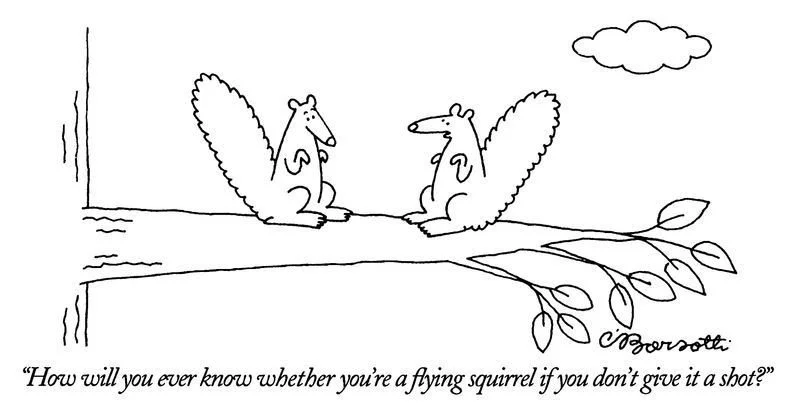
Here are some everyday ways you can practice taking small risks and build the confidence and judgment you need as a leader. Strategic risk-taking still applies, so choose with enough care that you can grow from the experiences without creating unnecessary problems for yourself.
Ordering something new instead of getting the same meal you always choose. Choose something different, but still realistic for your tastes or dietary needs.
Starting a conversation with someone you don’t know well. Keep the setting comfortable and the interaction low pressure.
Signing up for a class or activity you’ve never tried before. Pick something you’re genuinely interested in so the risk feels worthwhile.
Going somewhere by yourself when you’d usually wait for company. Choose a setting that feels safe and familiar enough for you to practice the experience.
Going to an event when staying home would feel easier. Choose something manageable and have an exit plan in case it starts to feel like too much.
Taking a different route to work instead of following the same routine every time. Check the route ahead of time, use a map so you don’t get lost, and leave early if it may take longer.
Leadership requires us to make hard decisions. Acting with strategic courage and integrity helps ensure those decisions reflect both the needs of the organization and the people affected by them. When we own those decisions with honesty and responsibility, we also make it easier for others to act with courage. This week, practice courage in smaller ways on purpose. Pick something from the list and see what it teaches you. A small choice handled with intention can build more confidence than waiting for a bigger moment to prove something.

Elevate your understanding of Strategic Courage by taking flight with the following resources. Use this opportunity to navigate, uncover, and expand the horizons of your leadership influence.