Using Data to Drive Better Decisions
Leaders make decisions every day without pausing to reflect on what might be driving them. Experience often fills in where information is missing. Patterns from the past shape how current situations are interpreted, and confidence in one's judgment can allow assumptions to pass as facts. In routine situations, that process can be effective because conditions are familiar and the scope is manageable. As complexity increases or circumstances shift, familiar patterns can become less reliable than they seem.
Data offers a different starting point. Rather than relying on what a situation feels like, it provides clear reference points and trends that are difficult to see from experience alone. Using data to drive decisions gives judgment something concrete to work with and helps direct attention to where it matters most.
Leaders who use data well ask better questions, interpret information carefully, and allow it to inform decisions without losing sight of context. Clear information combined with sound judgment leads to decisions that teams can trust.

Self-Assessment:
Using Data to Drive Better Decisions
Please take a few moments to contemplate the following self-reflection questions. Where can you identify opportunities for personal growth in your leadership?
When I make a decision, do I look for data to support it, or do I rely primarily on what I already know?
Do I know which metrics in my department are most reliable and where they come from?
When data points to a cause I did not expect, do I follow it or do I default to my original interpretation?
Have I made sure the people on my team understand how to read and question the data they work with?
Do I share the reasoning behind my decisions, including the data that informed them, with the people affected?
When results fall short, do I revisit the data, the interpretation, and the action taken?
Am I as data-driven in decisions about people as I am in operational decisions?
Do I treat data as a starting point for a conversation, or as the final word on what should happen next?
Remember, this self-assessment is just a starting point for understanding your knowledge of Using Data to Drive Better Decisions as a leader. It's essential to reflect on your responses and actively work on areas where improvement is needed. Additionally, seeking feedback from others and working with your ECFL Leadership Coach can provide valuable insights into your strengths and weaknesses.


Data literacy is the ability to read, interpret, and question information with enough confidence to act on it and enough judgment to recognize its limits. A leader does not need to be a statistician, but understanding what a number represents, where it comes from, and what it leaves out shapes how effectively it is used. When that understanding extends across a team, people are better positioned to contribute observations, ask stronger questions, and engage meaningfully in decisions that affect their work.
Experience and intuition have genuine value in leadership, and most leaders have made sound decisions based on instinct alone. The challenge is that intuition is shaped by prior experience, which means it often reflects the past more than the present. When circumstances are familiar, that can work well. When they change, the same instincts that once served a leader well can lead to a confident but inaccurate interpretation of what is happening.
“Errors using inadequate data are much less than those using no data at all.”
Consider something as simple as checking the weather. Most people have a sense of what it will be based on the sky, the season, or the day before. That instinct is often close enough. When the decision carries more weight—before a flight, an outdoor event, or a long drive—people check the forecast. The data does not replace instinct; it confirms or corrects it before action is taken. Leadership decisions follow a similar pattern:
Assuming a performance issue is a people problem before examining the process.
Interpreting a team's silence in a meeting as agreement rather than hesitation.
Trusting a familiar vendor without reviewing current performance data.
Reading a strong quarter as proof that everything is working without examining which factors drove the result.
A 2025 study by Hu et al. on leadership decision-making found that leaders who relied heavily on data in operational choices were more likely to default to intuition when decisions involved people or team dynamics. Familiarity with a situation further increases reliance on instinct, even when conditions have changed. Data provides judgment with a more reliable foundation, particularly in situations where experience or unconscious bias might otherwise influence a decision.
Research from McKinsey has found that organizations making intensive use of customer analytics are significantly more likely to outperform their competitors. In some studies, those organizations were 23 times more likely to outperform peers in new customer acquisition and 19 times more likely to achieve above-average profitability. The point is not that data guarantees results, but that disciplined use of information improves the quality of strategic choices. That raises a practical question for any leader: how consistently is data informing decisions in your department?
The value of that discipline becomes clearer in day-to-day decisions. One example illustrates how quickly assumptions can be corrected when information is examined closely.
In the early 2000s, a Toyota manufacturing plant began experiencing recurring bottlenecks in production. Leadership initially assumed the cause was worker inexperience and considered retraining staff. Before acting on that assumption, they began collecting real-time production data. What the data revealed had nothing to do with the workforce. A poorly calibrated machine was causing delays every time a certain part was processed. By following the data rather than the assumption, leaders identified the actual source of the problem and resolved it. Production efficiency increased by 20% within weeks.
Experience alone was not enough to see what was actually happening. The assumption made sense given what leadership knew at the time. It was the data that made it possible to reassess the situation with greater clarity.
This example also highlights an important leadership habit: before acting on data, confirm that the information is reliable. A number pulled from an inconsistent source or based on outdated definitions can lead a decision in the wrong direction. Taking time to verify that the data is current, properly defined, and from a dependable source is worth the extra effort.
Revisiting a decision to determine whether it produced the intended result is what completes the process. Building that evaluation into regular decision-making allows leaders to refine their judgment rather than rely on an interpretation that may no longer fit the situation.
“The goal is to turn data into information, and information into insight.”

Data is only as useful as the habits built around it. These practices help leaders move from collecting information to applying it:
Strengthen Data Understanding: Make sure leaders and their teams can read and question the numbers they work with. The goal is comfort with asking what a number actually represents, where it comes from, and what it might be leaving out. That kind of thinking produces clearer interpretations and more reliable decisions.
Balance Data with Judgment: Treat data as a starting point, not the final answer. Before acting on numbers, bring in the operational knowledge and firsthand observations of the people closest to the work. That combination will produce a more accurate picture than either source alone.
Make Data Visible: Share the numbers and the reasoning behind decisions openly so people understand what drove a change and how their work connects to the results being tracked. Visibility builds accountability and helps teams adjust using the same information leadership relies on.
Follow Through and Evaluate: When the data points clearly in a direction, make the call and move. Then revisit the decision on a defined schedule to confirm whether it produced the intended result. If the outcome falls short, examine whether the data was sound, the interpretation was accurate, or the action taken was appropriate.
Ensure Data Quality: Before acting on numbers, confirm that the data is current and clearly defined. Information that appears reliable can reflect outdated conditions or inconsistent definitions, and a decision made on that foundation will reflect those gaps.
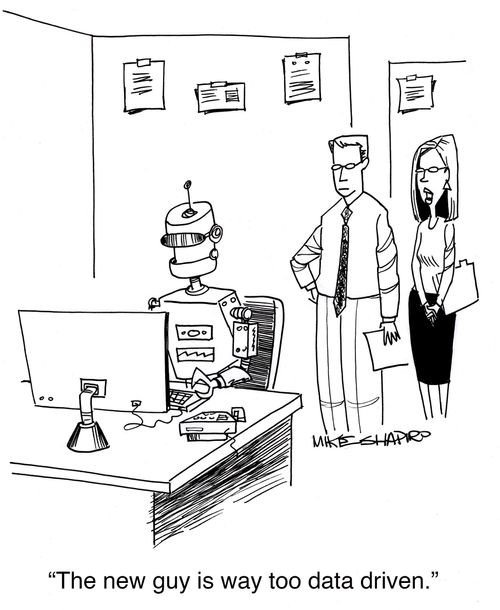
Most leaders have access to more information than they realize. The challenge is building the habit of using it deliberately and allowing it to inform decisions without losing sight of leadership judgment.
Identify one decision you make regularly and examine what data is informing it. Consider where that data comes from, whether it is reliable, and whether the results of past decisions based on it have been evaluated. If any of those answers are unclear, begin there.

Elevate your understanding of Using Data to Drive Better Decisions by taking flight with the following resources. Use this opportunity to navigate, uncover, and expand the horizons of your leadership influence.
How Emotionally Intelligent Leaders Apply The 10-10-10 Rule For Better Decision-Making
The Advantages of Data-Driven Decision-Making | HBS Online
Intuition in Decision Making: Insights From Drift Diffusion Modeling