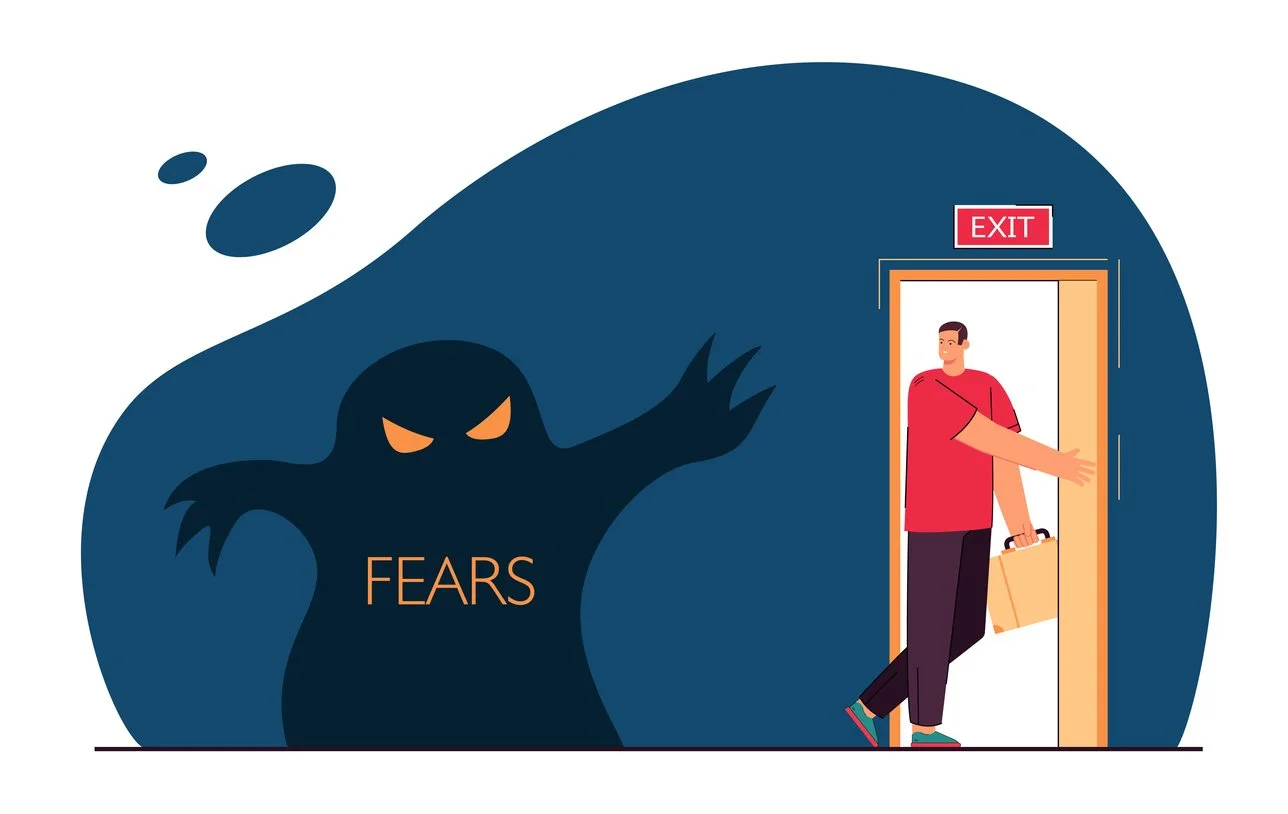
The Monster Called Fear
Leadership asks us to do things that feel uncomfortable. We have to make hard calls, have conversations we would rather avoid, and step into challenges that do not feel easy or natural. Many of us know what we should do, but still hesitate when the moment comes. Fear is often the reason.
Fear prevents us from growing as leaders by pulling us back toward what feels safe and familiar. That pull can feel reasonable, especially when our current habits still seem to work. Comfort becomes easy to protect, even when growth asks more of us or our usual way of doing things no longer serves us well.
Every leader feels fear. Our integrity determines what we do next. Leading with courage asks us to act with honesty and conviction even when a situation feels uncomfortable or more difficult than we want to face. Growth asks us to move beyond our natural strengths and toward the moments we would rather avoid. That is how we begin confronting The Monster Called Fear.
Self-Assessment:
The Monster Called Fear
Please take a few moments to contemplate the following self-reflection questions. Where can you identify opportunities for personal growth in your leadership?
When a situation feels uncomfortable, do I usually address it or avoid it?
Am I aware of what fear sounds like in my own thinking?
When I hesitate, can I usually identify what I am afraid of?
Do I rely too heavily on the abilities that come most naturally to me?
When growth asks more of me, am I willing to step beyond what feels safe and familiar?
Can I admit when fear is influencing my choices?
Do I make excuses that protect my comfort more than my growth?
When fear shows up, am I honest with myself about what it is costing me?
Remember, this self-assessment is just a starting point for understanding your knowledge of The Monster Called Fear as a leader. It's essential to reflect on your responses and actively work on areas where improvement is needed. Additionally, seeking feedback from others and working with your ECFL Leadership Coach can provide valuable insights into your strengths and weaknesses.

Courage is part of ordinary life. A person shows courage when they go back to school after years in the same routine, leave a stable job to start over in a healthier environment, admit they need help with grief or mental health, or tell a doctor about a symptom they have been avoiding because they fear the answer. Whenever someone faces what feels uncertain or potentially costly instead of staying where they feel safe, they are acting with courage.
Leadership asks for that same response, though the moments usually look less dramatic. In leadership, courage can look like:
Admitting in front of others that a decision was not the right one and explaining how it will be corrected
Giving difficult feedback to someone you get along with well
Speaking up in a meeting when a plan sounds good on the surface but carries obvious risk
Asking for clarification instead of pretending that you understand
Saying you need more time to think something through when others are pushing for a fast answer
Letting go of a process you created because a better one now exists
Asking a quieter person for input when stronger voices are taking over
Pausing a conversation before emotions take over
Handing off something you do well so another person has room to grow
Seeing these moments clearly helps us recognize that courage is already part of leadership. Small acts of honesty, restraint, clarity, and initiative build the same capacity that larger moments will later require. Recognizing these moments can help us act more courageously when bigger challenges come.
“We can choose courage or we can choose comfort, but we can’t have both.”
Our natural strengths can be helpful, yet they can also be limiting when we rely on them too heavily and avoid the abilities that come to us less naturally. A person who is strong in planning and execution may avoid emotionally charged conversations, finding comfort in structured tasks rather than the unpredictability of conflict. A person who connects easily with others may avoid direct accountability because the instinct to protect a relationship can make honest correction feel like the relationship itself is at risk. Fear often keeps us relying on the abilities that feel familiar, while our less natural ones go unpracticed.
Questions like these can help us identify where The Monster Called Fear is influencing our choices, which strengths we rely on most, and which weaker areas still need attention:
Which parts of leadership come most naturally to me, such as planning, relationship building, decision-making, or direct communication?
Which parts of leadership feel hardest for me to handle well, such as conflict, correction, vulnerability, or accountability?
What kind of situation do I keep delaying even though I know it needs my attention?
When under pressure, what strengths do I lean on first, and what abilities do I avoid?
What skills am I underusing that would make me a stronger leader if I gave them more attention?
What would a more courageous response look like if I practiced those skills?
Write your answers down and give yourself room to come back to them with a clearer head. Real growth starts when we become honest about where fear is getting in our way.

Keeping our fears vague only gives them more power. Once we’re able to identify and name them, they become easier to confront. The steps that follow break down that process. Cindy's experience with Paige provides an example of how each one would play out in a real situation.
Cindy Letterby supervises Paige Turner at The Write Co., a stationery and custom packaging company. Paige is one of the strongest designers on the team. She works quickly, solves problems without needing much follow-up, and manages a high volume of custom orders, which means she is regularly communicating with customers about their requests. Cindy trusts her work, and her colleagues rely on her because she is both capable and consistent.
The issue has nothing to do with effort or output. Paige's emails to customers tend to be so brief that they read as cold, and a recent customer replied with noticeable frustration after receiving one. A coworker mentioned quietly that the tone might be affecting customer relationships. Cindy is aware of the pattern.
Still, she keeps waiting. Paige takes pride in her work, and feedback about her communication style has historically brought a sharp response. Cindy tells herself she needs to wait until the current project wraps up, that now is not the right time with everything on Paige’s plate, but there is always another project and another reason to wait. The truth is that encouragement comes naturally to Cindy and direct correction does not, and it is easier to find a reason to delay than to have a conversation she has been dreading.
Cindy decides to work through an action plan to see the situation more clearly.
Step one: Start with what comes naturally
Before looking at what is hard, reflect on what you already trust about your own leadership. Write down your strongest traits—the abilities that feel natural, the responsibilities you handle with confidence, and the qualities others count on in you most. Starting with what is already working keeps fear from setting the terms for how you evaluate yourself before you have even begun.
Cindy's first step: Building rapport comes naturally to me, and so does encouraging people and making them feel comfortable enough to be honest. My team relies on me for support, and I am confident in my ability to deliver it.
Step two: Identify what feels unnatural
Once you have a sense of where you feel capable, name the areas that need attention. List the responsibilities that feel uncomfortable, then get specific about what exactly makes them hard. A clearly defined problem is far easier to address than a vague one.
Cindy's second step: Confrontation makes me uncomfortable. I also struggle to stay honest when I sense someone getting defensive, and I have a habit of waiting until I feel certain even when the situation is already clear. All three are present in the conversation I have been putting off with Paige, and the courage it requires is recognizing that the short-term discomfort of having it will serve us both better than continuing to avoid it.
Step three: Name the fear
Naming fear specifically is what makes it manageable. When fear stays vague, it tends to feel bigger than it actually is and bleed into other areas of our thinking. Putting it into plain language helps us see exactly what we are reacting to rather than letting it grow unchecked.
Cindy's third step: I am afraid Paige will take the feedback personally and get defensive. I am also afraid the conversation will damage a working relationship that matters to me.
Step four: Name the cost of waiting
Waiting has a cost, and it is easy to miss because the damage builds gradually rather than all at once. Small things accumulate while we delay; trust erodes, problems grow, and once manageable situations become harder to address the longer they’re avoided.
Cindy's fourth step: Customers keep receiving cold messages, and frustration keeps building. A pattern that started with one complaint has had time to settle into how customers experience our team. The longer I wait, the more damage accumulates from a problem I have the ability to address.

Step five: Write down the worst-case scenario
Describe the worst outcome you can imagine if you were to act. What could realistically go wrong, and how bad would it actually be? Most of the time, seeing it on paper makes it feel less foreboding than it did in our minds.
Cindy's fifth step: The conversation could go poorly and leave Paige feeling blindsided or like her character is being criticized rather than her approach. She’s warm and capable in person, so she may not realize her emails are landing differently than she intends. What if she becomes guarded, pulls back from the team, or starts looking for somewhere else to work?
Step six: Write down the best-case scenario
Fear focuses on what could go wrong, and the best-case scenario deserves the same attention. Writing down what could genuinely improve if you act gives a more complete picture of the situation and keeps fear from being the only voice in the room.
Cindy's sixth step: Paige could understand that the feedback is about her approach and not her character, and come away from the conversation with more trust in my leadership than before. I could also walk away having done something that doesn’t come naturally to me, which is exactly the kind of growth I have been avoiding.
Step seven: Decide what a courageous response looks like
Knowing what the problem is and deciding what to do about it are two different things. A general intention to do something eventually has a way of never getting done, so naming exactly what you are going to do and when gives it a real chance of happening.
Cindy's seventh step: A courageous response here would look like: setting up a time to meet with Paige, coming prepared with specific examples, and then carefully explaining how her emails have been affecting customer relationships. The hard part will be staying on script, should she take it personally—that’s the moment I’ll want to walk back or soften the message to preserve the relationship.
Step eight: Talk it out if needed
Some fears are easier to work through with another person. Reviewing your approach with someone you trust offers perspective and support, and sometimes that is exactly what it takes to act courageously.
Cindy's eighth step: Before I have this conversation with Paige, I want to walk through my approach with someone I trust. Practicing in advance will make it easier to stay focused on what I need to say, regardless of how she receives it.
“Leaders are the ones who run headfirst into the unknown.”

As Winston Churchill once said, “Fear is a reaction. Courage is a decision.” Along with the action plan above, these best practices can help you build the habits that make acting courageously easier over time.
Practice What Feels Unnatural: Fear usually shows up where you feel least confident. Build courage by practicing that skill in smaller moments first, then work your way up to harder situations. For example, if you're uncomfortable with conflict, start by addressing a small issue with a peer before tackling a bigger problem with your team. That will give you the confidence you need to try something more difficult next.
Use Fear as Information: Treat fear as a normal part of growth, not a sign that something's wrong. Fear is useful feedback because it signals when we're moving beyond what feels familiar. The next time it shows up, use it as a cue to slow down, think clearly, and choose your next step with intention, whether that means gathering more information, asking for input, or acknowledging the risk before you move forward.
Build Your Tolerance for Discomfort: Fear feels uncomfortable because it's unfamiliar. The more you expose yourself to uncertainty in small ways, the easier it gets to handle bigger moments when they matter. Start with smaller fears and work your way up, because each time you face discomfort, you expand your capacity to handle the next challenge.
Surround Yourself with Courageous People: Work with people who challenge how things are done and push for better solutions. Being around people who act courageously makes it easier for you to do the same. Their willingness to speak up, take initiative, and face hard conversations strengthens your own ability to confront fear.
Most leaders can point to at least one conversation they’ve been postponing, one decision they’ve been avoiding, one piece of feedback they’ve been sitting on, or one area where discomfort has been driving our decisions. We’ve all been there, both in life and leadership. Recognizing what’s holding us back is where true courage begins.

Elevate your understanding of The Monster Called Fear by taking flight with the following resources. Use this opportunity to navigate, uncover, and expand the horizons of your leadership influence.